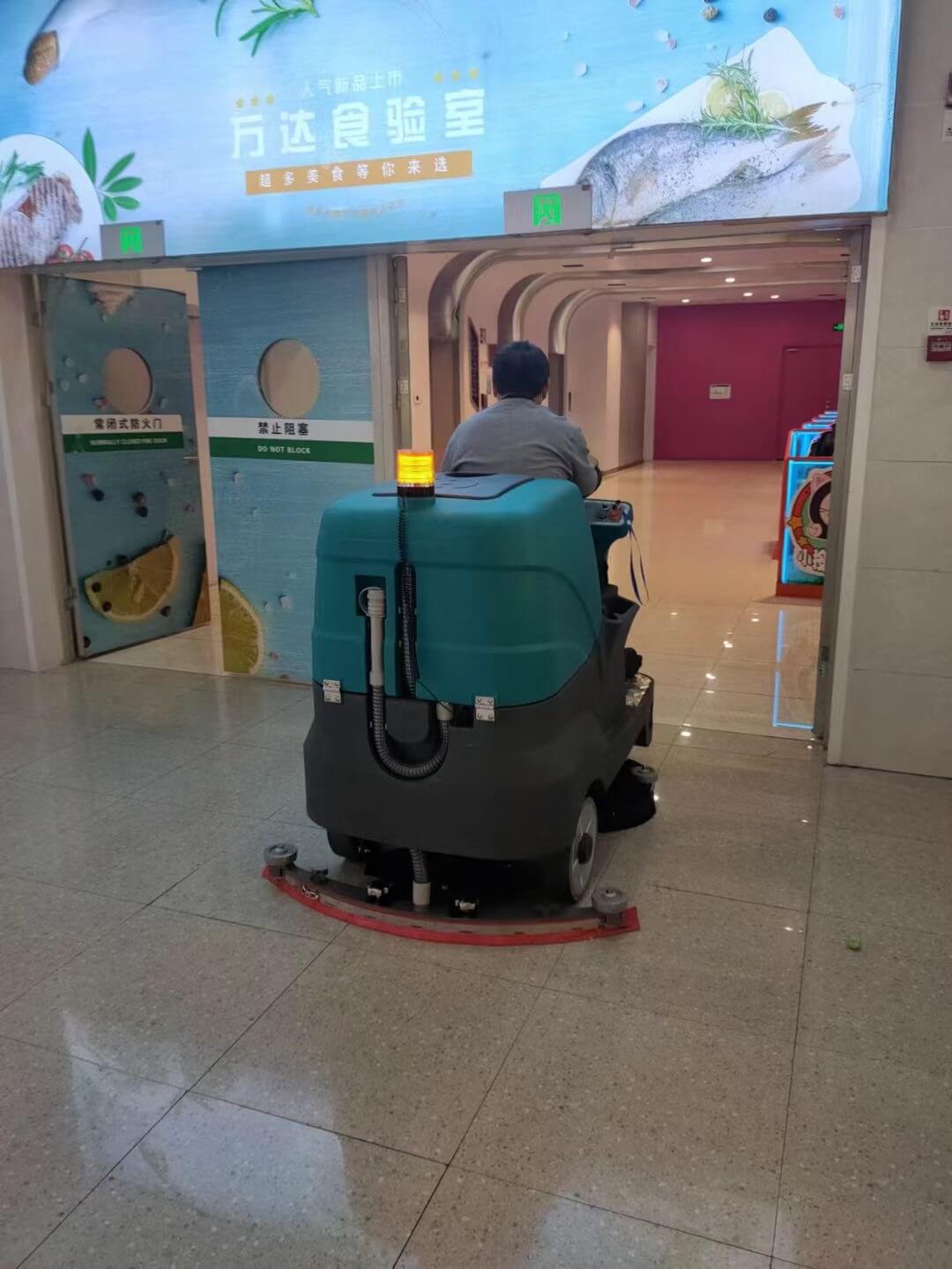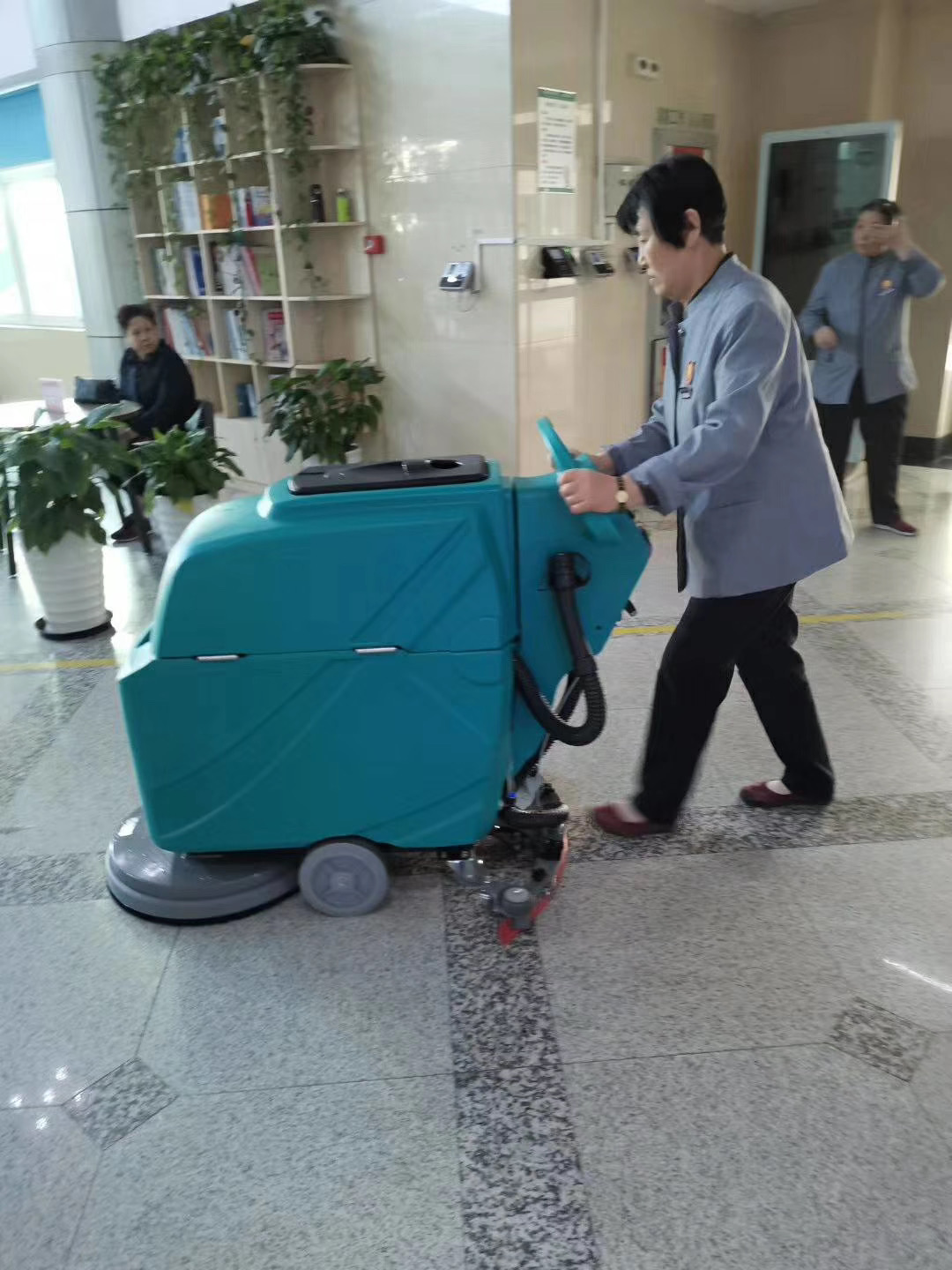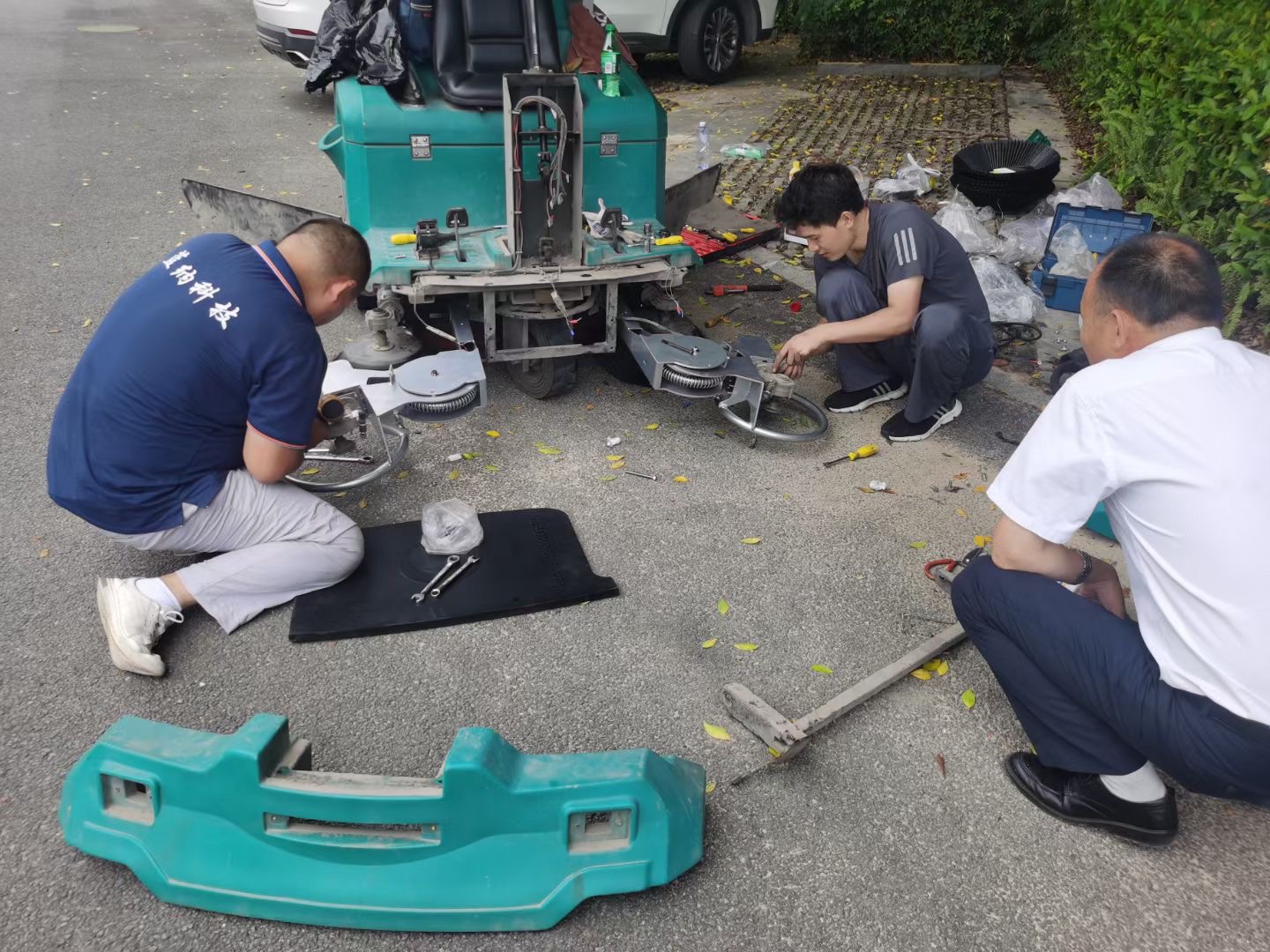
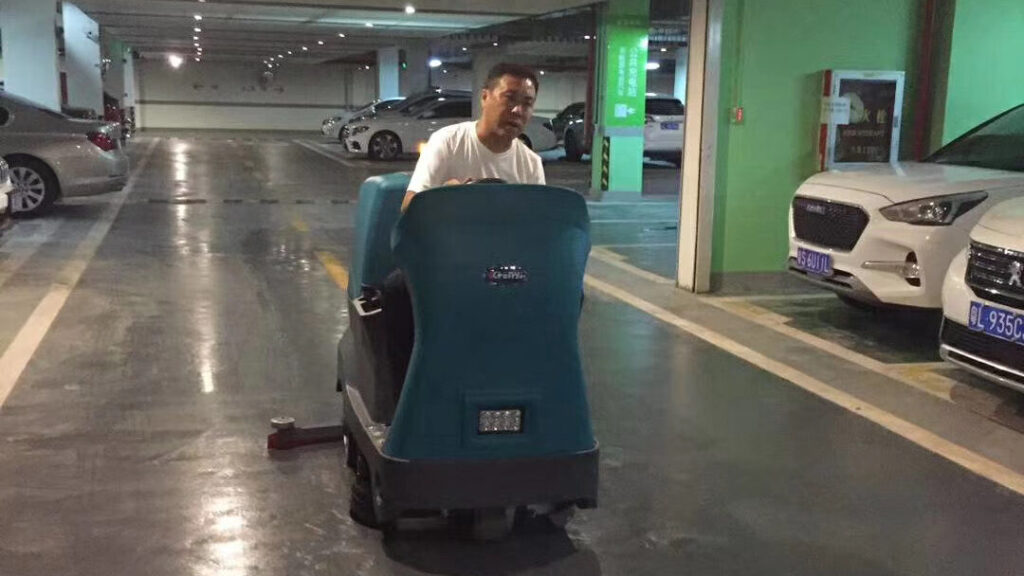
This large rider scrubber DC980 is designed for industrial and commercial floor cleaning. This user manual provides step-by-step instructions to operate the three-brush rider scrubber safely, effectively, and correctly.
Reading and following these instructions will ensure optimal cleaning performance and extend the service life of the equipment.
1. Safety Precautions
1.1 General Safety Warnings
- Read and understand this manual before operating the machine.
- Only trained and authorized personnel should operate this machine.
- Do not operate the machine under the influence of alcohol, drugs, or medication that may impair judgment.
- Always follow local workplace safety regulations.
1.2 Electrical and Battery Safety
- Use only the batteries and chargers specified by the manufacturer.
- Do not expose electrical components to water.
- Disconnect the battery before performing maintenance or repairs.
1.3 Operating Safety
- Do not operate the machine on slopes exceeding the rated maximum incline.
- Reduce speed when turning or operating in congested areas.
- Keep hands, feet, and loose clothing away from moving parts.
1.4 Environmental Safety
- Do not use the machine in explosive or flammable environments.
- For indoor use on hard, level floor surfaces only.
- Do not operate in areas with loose debris, flammable liquids, or explosive dust.
- Do not operate on ramps or slopes exceeding the rated capacity of the machine.
1.5 Intended Use
The Large Rider Scrubber is designed for industrial and commercial floor cleaning applications. It is suitable for hard floor surfaces such as:
- Concrete
- Epoxy-coated floors
- Tile and grout
- Vinyl and sealed stone floors
This machine is intended for indoor use only, unless otherwise specified
2. Product Description
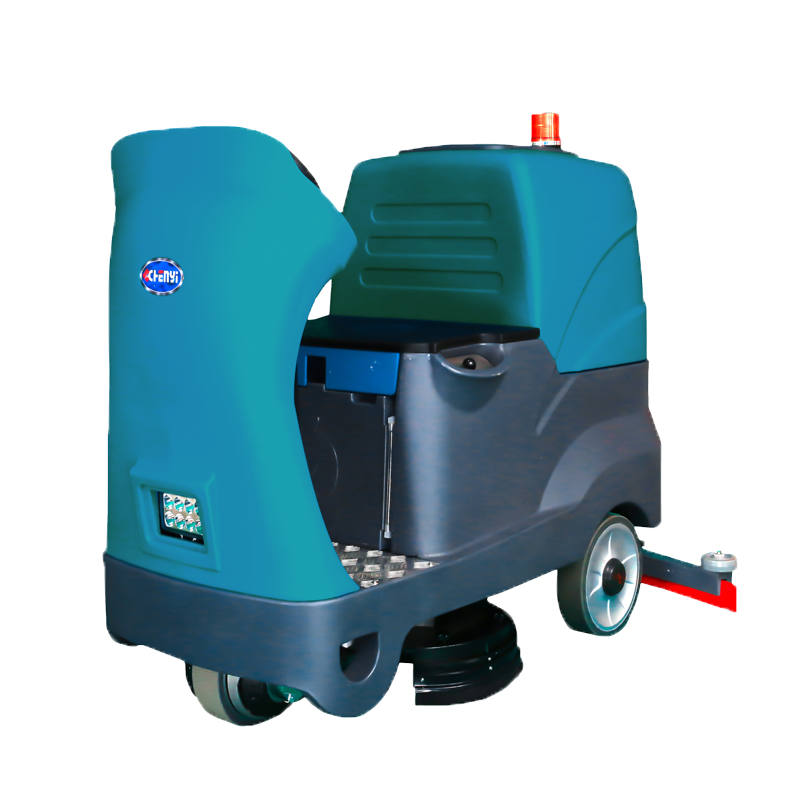
The Large Rider Scrubber is a battery-powered, ride-on floor cleaning machine designed for large-area commercial and industrial applications. It combines scrubbing, solution dispensing, and recovery into a single pass, significantly improving cleaning productivity.
3. Main Components
- Operator seat
- Steering wheel
- Control panel
- Solution tank
- Recovery tank
- Scrub deck (brushes or pads)
- Squeegee assembly
- Drive motor and wheels
- Battery compartment
4. Operating Conditions and Limitations
The Large Rider Scrubber is designed for industrial and commercial floor cleaning applications. It is suitable for hard floor surfaces such as the following floor types:
- Sealed concrete, terrazzo, vinyl, tile, epoxy-coated floors
5. Preparing the Machine
5.1 Pre-Operation Checklist
- Check battery charge level.
- Inspect squeegee blades for damage.
- Verify the solution tank is filled.
- Ensure brushes or pads are properly installed.
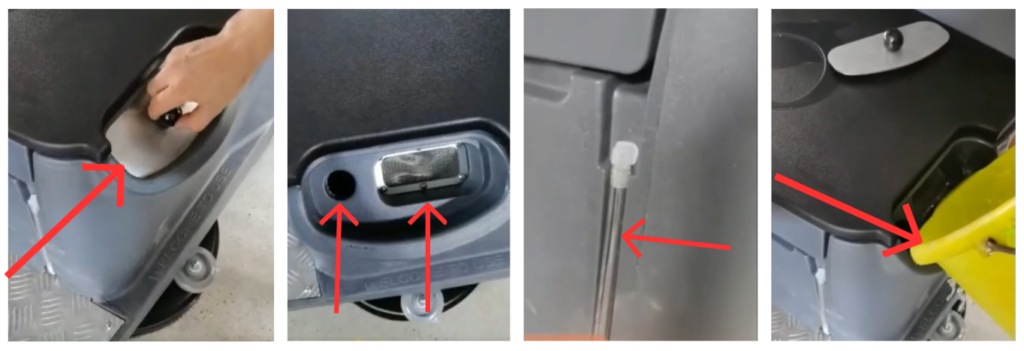
5.2 Add Clean Water
Fill the clean water tank via the water inlet. A hose can also be used.
5.3 Check Water and Sewage System
- Ensure the clean water filter is in place.
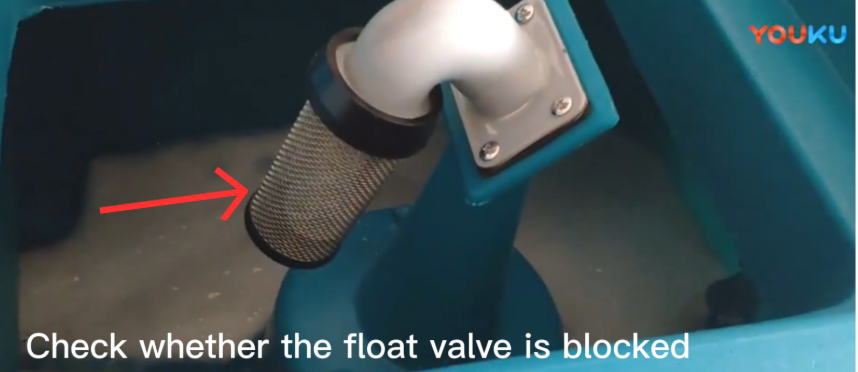
- Check the sewage float net for obstructions.
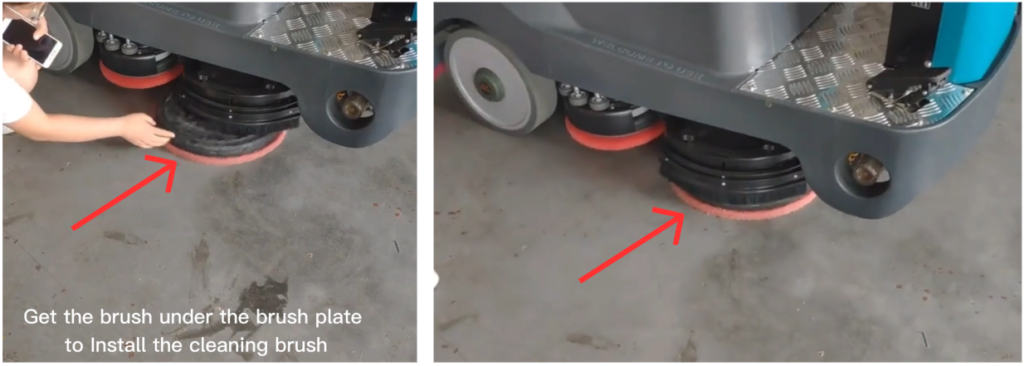
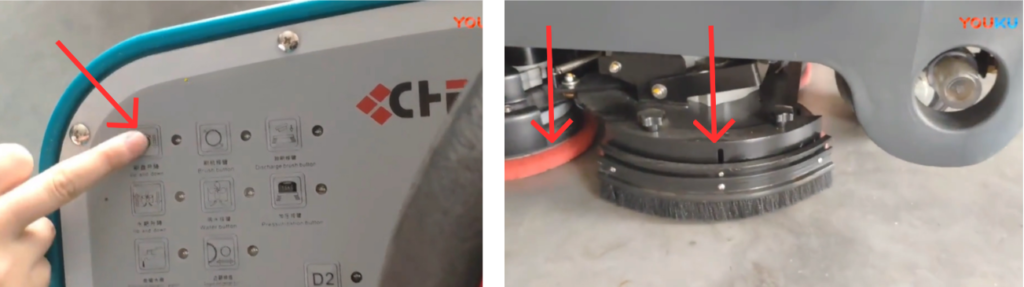
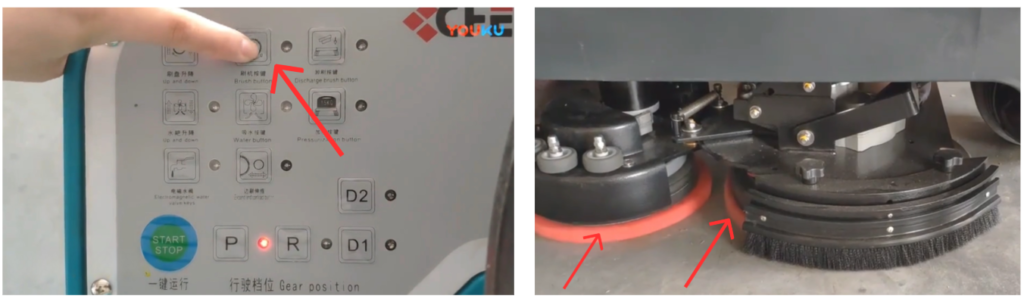
5.4 Install cleaning Brushes
- Turn the key switch to the ON position.
- Place each brush under the brush plate.
- Press the Brush Button to secure the brush.
- Rotate the startup brush disk until properly installed.
6. Cleaning Procedure
- Start the machine using the power switch.
- Select the desired direction of travel.
- Lower the scrub deck and squeegee.
- Activate solution and vacuum systems.
- Drive forward at a controlled speed.
- Overlap cleaning paths slightly for best results.
Operating Instructions
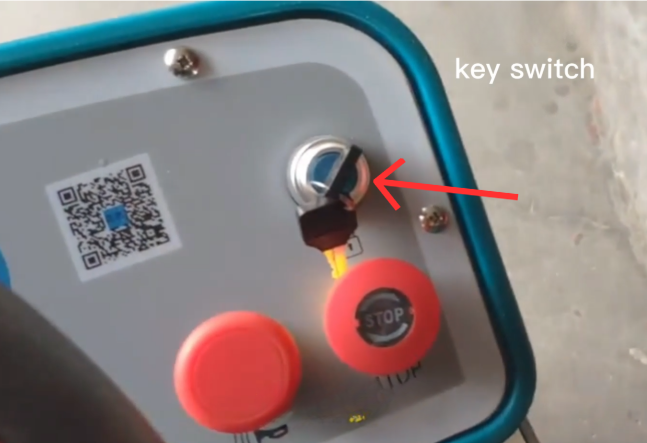
- Power On
- Turn the key switch to the ON position.
- Start Machine
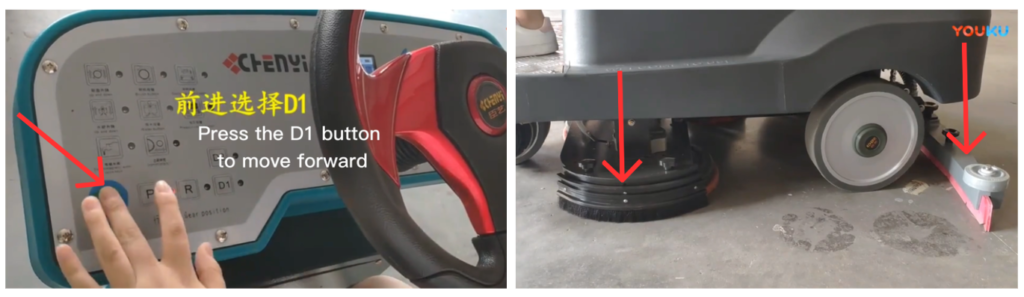
- Press the One-Key Start Button.
- The machine automatically:
- Lowers the scrubbing brushes and squeegee
- Opens the solenoid water valve
- Activate Functions
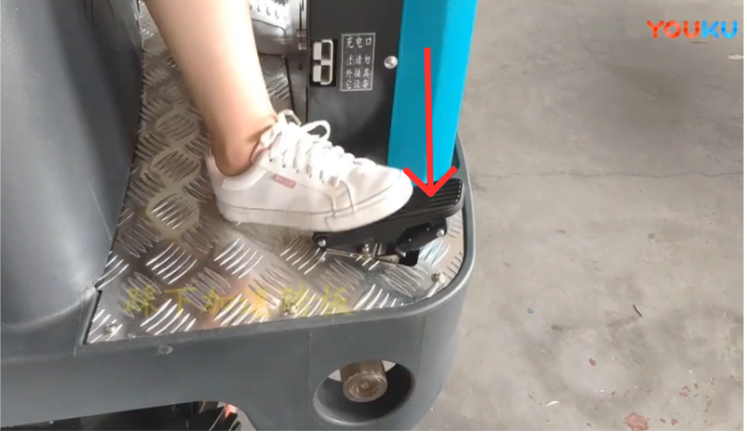
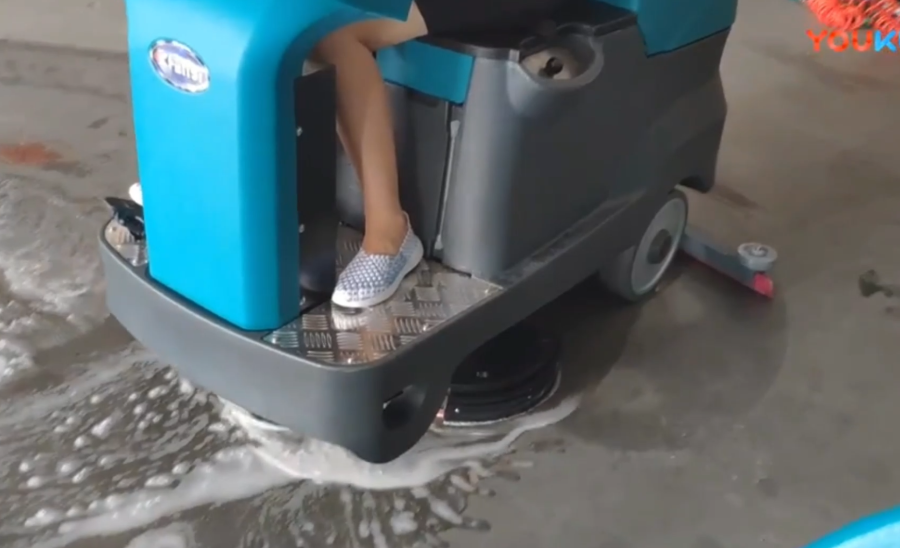
- Press the Acceleration Pedal to start scrubbing and water flow.
- Movement
- D1/D2: Forward gears (D1 is slow speed, D2 is fast speed).
- R: Reverse
- P: Park
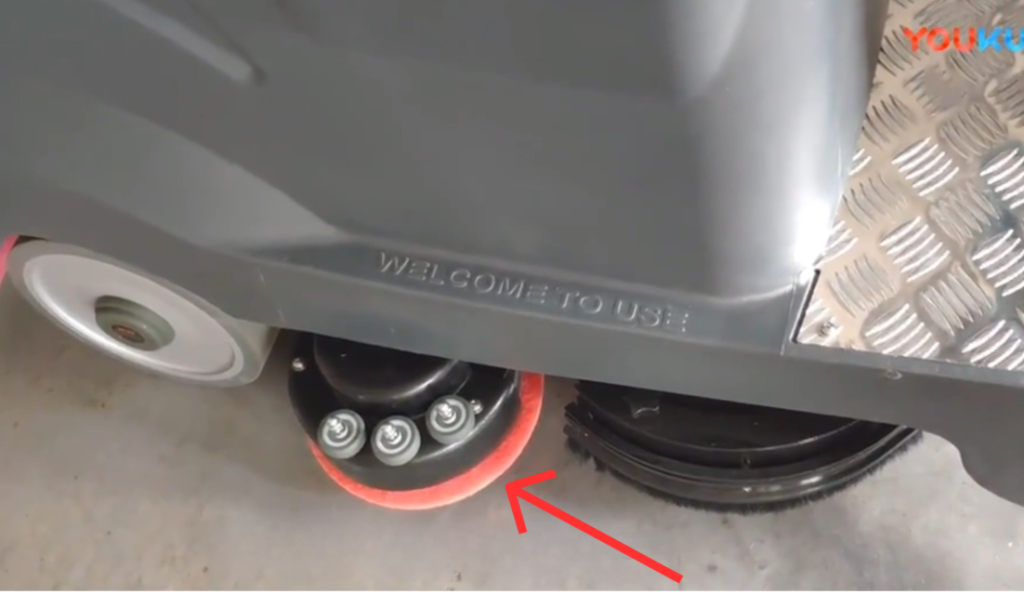
- Side Brushes
- Press the Side Brush Button to clean edges and corners.
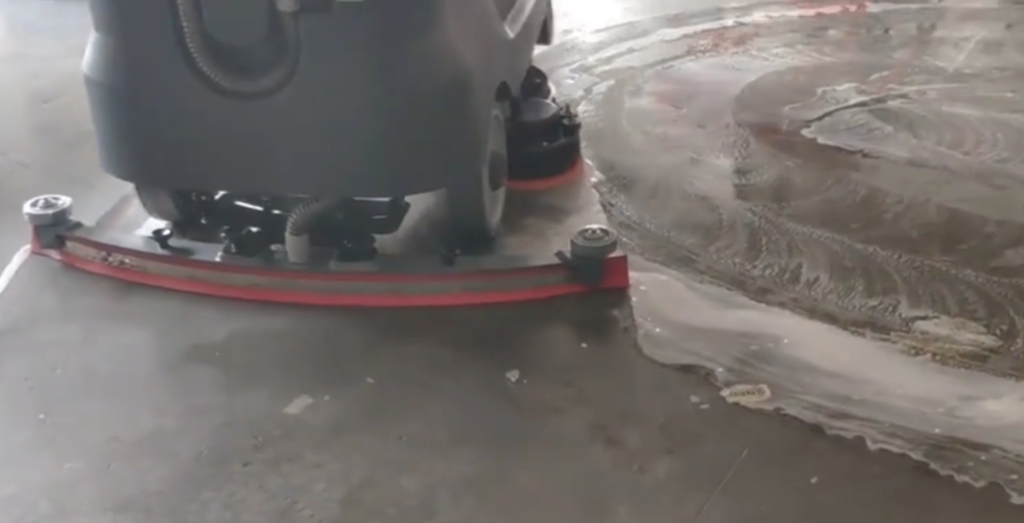
- Cleaning Observation
- After cleaning, the floor should be free of debris and water.
- Inspect the ground to ensure all dirty water is collected.
- Check the float valve for blockages.
7. Shutdown Procedures
- Release the accelerator pedal.
- Turn off solution flow.
- Raise the scrub deck and squeegee.
- Turn the key switch to OFF.
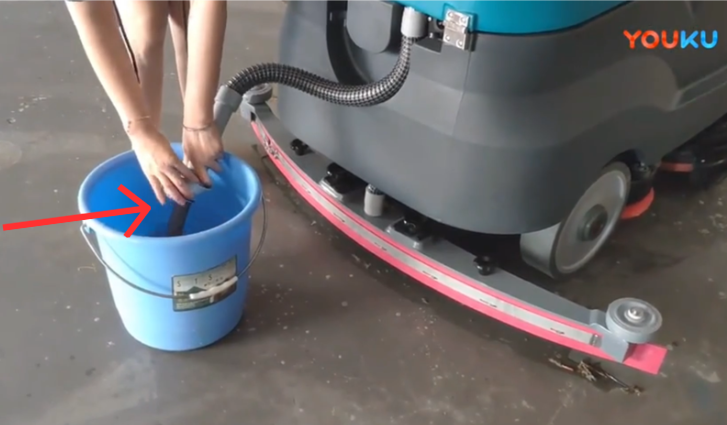
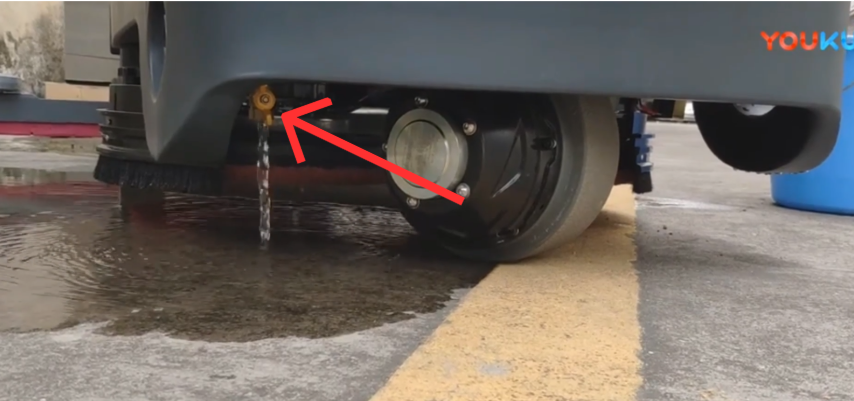
- Drain the dirty water.
8. After Use Maintenance
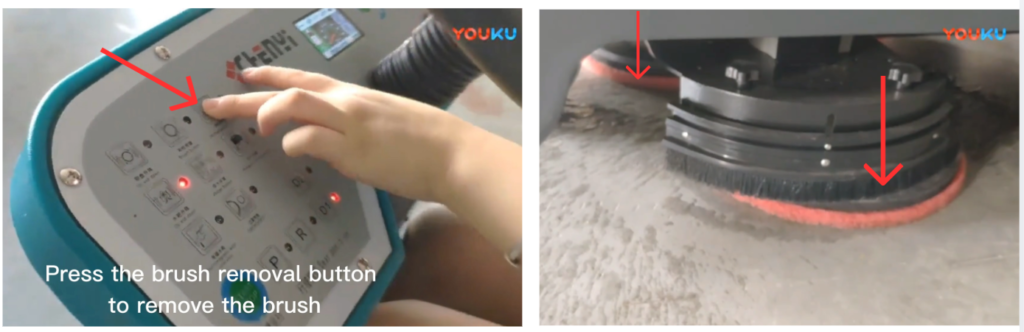
- Remove Brushes
- Press the Brush Removal Button and remove brushes.
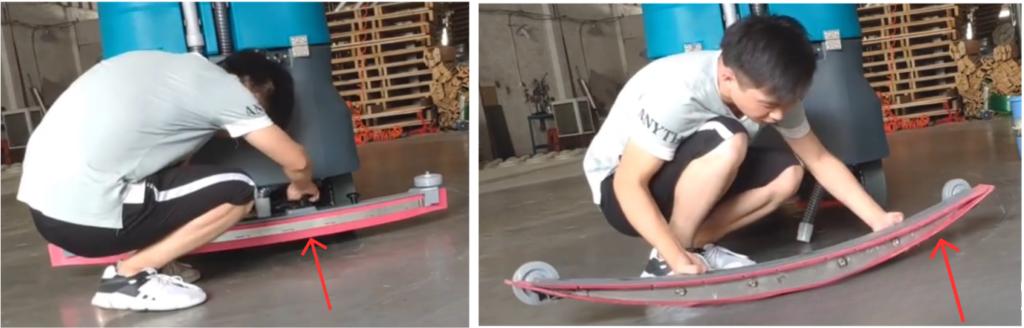
- Clean Squeegee
- Rinse thoroughly with clean water.
- Inspect for nails or hard objects that may puncture the sewage pipe.
- Drain Excess Water
- Prevent detergent residue from corroding the squeegee.
- After the clean water tank is empty, the display will show a warning and sound an alert.
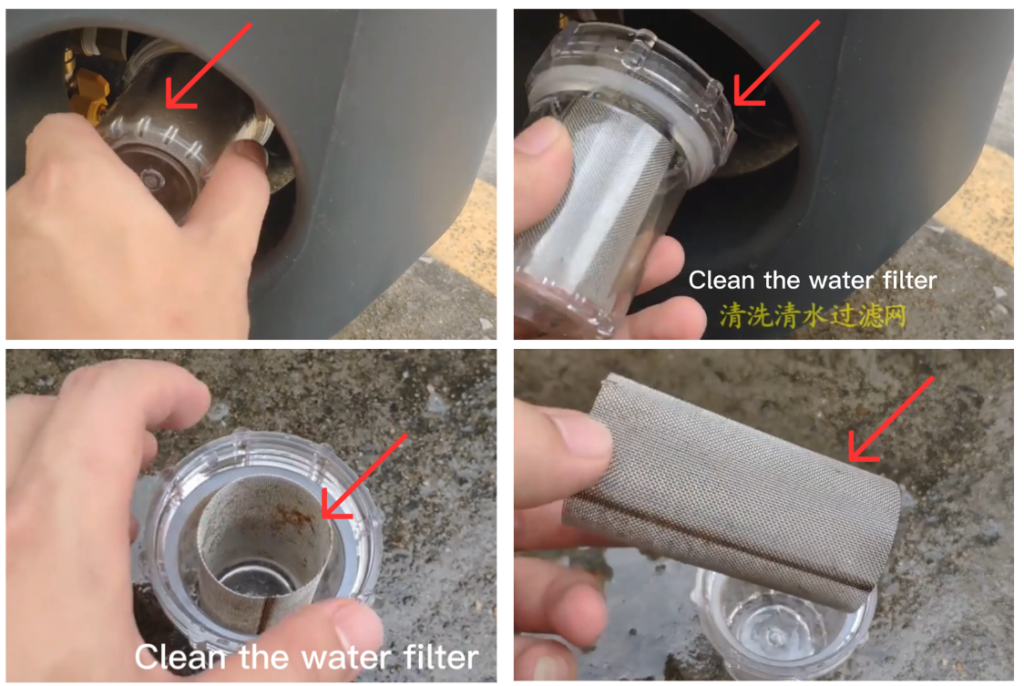
- Clean Water Filter
- Remove and rinse to prevent clogging.
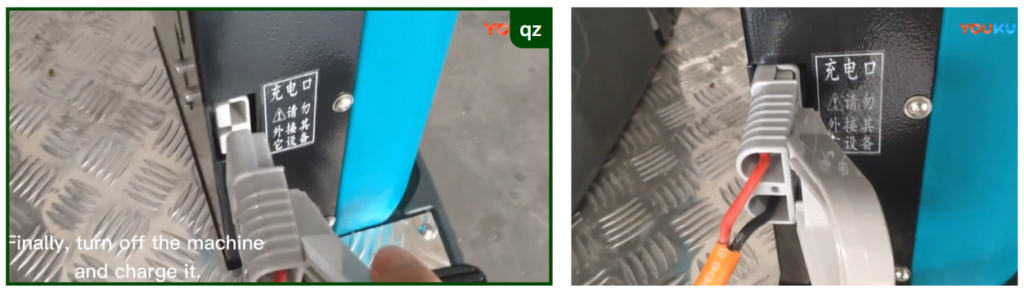
- Turn Off and Charge
- Switch the key to OFF.
- Connect the charger to maintain battery life.
9. Function Notes
- After using any single function, restart the one-key operation to resume automatic operation.
- Gear Description:
- D1 / D2: Forward
- R: Reverse
- P: Park
- IoT Function: Requires network signal to track machine status.
10. Routine Maintenance
10.1 Daily
- Empty and rinse recovery tank
- Clean squeegee and brushes
10.2 Weekly
- Check solution filter
- Inspect hoses and fittings
10.3 Monthly
- Inspect electrical connections
- Check fasteners and moving parts
10.4 Periodic Maintenance
- Replace worn squeegee blades
- Inspect hoses and electrical connections
10.5 Battery Maintenance
- Only use batteries approved by the manufacturer.
- Charge batteries in a well-ventilated area.
- Never operate the machine with damaged battery cables.
- Disconnect batteries before servicing.
- Recharge batteries after each shift
- Do not allow batteries to fully discharge regularly
- Keep battery terminals clean and dry
This machine is equipped with optional sealed lead-acid batteries featuring maintenance-free operation, no routine servicing, and automatic pressure-relief protection.
General Charging Principles
- Charge after each use. Recharge the battery as soon as the machine finishes operating.
- Do not deep discharge frequently. Avoid running the battery down to its minimum protection voltage.
- Use as you charge, charge as you use. Frequent partial charging is recommended to maximize battery life.
1. What Is a Short Circuit and How Does It Affect Battery Performance?
A short circuit occurs when the positive and negative terminals are directly connected, either externally or internally within the battery, causing a high current flow.
Effects of a Short Circuit:
- During charging, battery voltage rises very slowly and remains at a low level
- Electrolyte temperature increases rapidly and excessively
- Electrolyte density increases slowly or shows little to no change
- During discharge, terminal voltage drops quickly
Short circuits can cause severe damage, overheating, and permanent loss of battery capacity.
2. What Is Over-Discharge and How Does It Affect Battery Performance?
Over-discharge occurs when the battery continues discharging after reaching its minimum operating voltage.
Effects of Over-Discharge:
- Battery voltage drops sharply in a short time
- Internal chemical reactions become unstable
- Repeated over-discharge causes the positive plates to lose activity
- Battery service life is significantly reduced
- Operating time decreases and charging time increases
To protect battery life, avoid repeated deep or over-discharge conditions.
3. How Should the Battery Be Stored After Use?
Batteries are sensitive components. If the machine will not be used for an extended period:
- Remove the battery from the machine
- Store it in a dry, well-ventilated location at room temperature
- Avoid leaving the battery installed, as connected electrical components and circuit boards may cause continuous micro-discharge, even when the machine is powered off
Proper storage helps prevent capacity loss and premature aging.
4. Why Does Battery Life Become Shortened?
Common causes of reduced battery life include:
- Insufficient charging over long periods
- Leaving the battery uncharged for extended periods after discharge
- Frequent over-discharge during operation
- Using a non-standard or non-approved charger, leading to over-charging
- Voltage imbalance between batteries within a battery pack
- Long-term operation under low-voltage conditions
To ensure optimal performance and service life, always use the specified charger and follow the recommended charging and usage practices.
11. Storage and Long-Term Shutdown
- Fully charge batteries before storage.
- Drain solution and recovery tanks.
- Store the machine indoors in a dry environment.
- Recharge batteries every 30 days during long-term storage.
12. Troubleshooting Guide
| Issue | Possible Cause | Corrective Action |
|---|---|---|
| Machine does not move | Parking brake engaged | Release brake |
| Poor water pickup | Squeegee worn or dirty | Clean or replace |
| Short runtime | Batteries not fully charged | Recharge batteries |
| Streaking on floor | Incorrect blade angle | Adjust or replace blade |
13. Wear Parts and Accessories
Use only manufacturer-approved parts to ensure optimal performance.
- Scrub brushes and pad drivers
- Cleaning pads
- Squeegee blades
- Filters and hoses
- Approved detergents
Unauthorized parts may affect performance and warranty coverage.