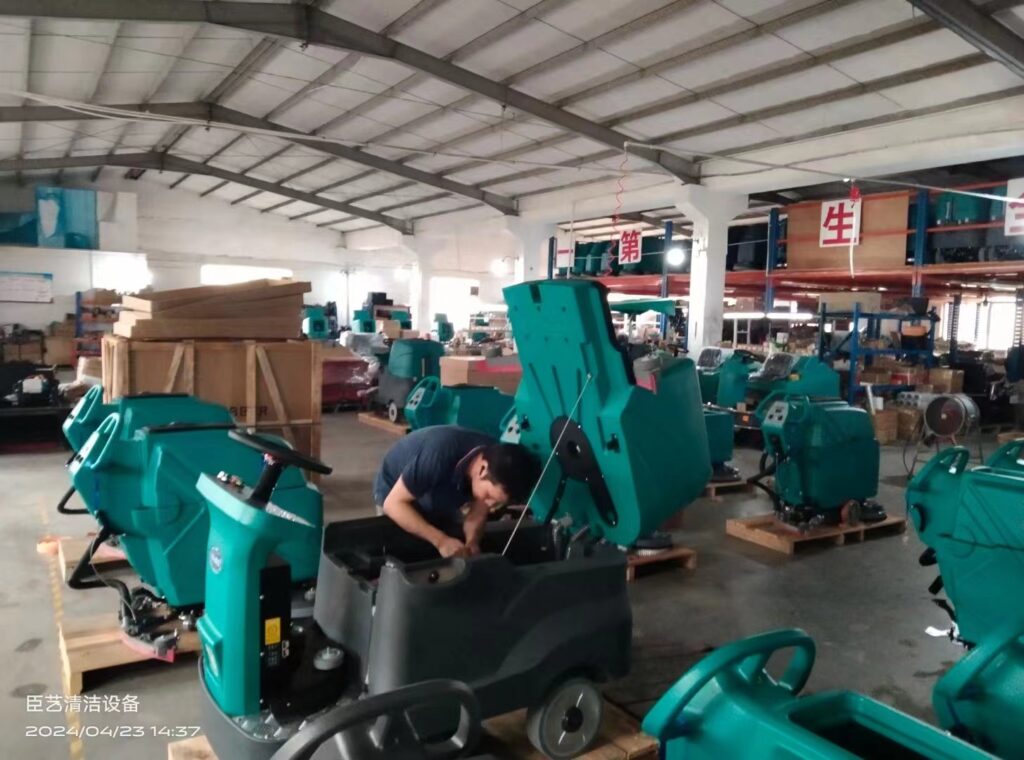
As someone who has spent years inside a floor cleaning machine manufacturer, working directly with distributors, importers, and service partners, I’ve learned one thing very clearly: most people outside the industry underestimate how complex — and how profitable — this business can be when it’s done right.
In this article, I want to take you inside our world, not from a marketing brochure perspective, but from real factory floors, distributor meetings, margin discussions, and after-sales headaches we’ve actually experienced. If you are a distributor, importer, or someone considering entering the commercial and industrial floor cleaning equipment market, this is written for you.
Overview of the Industrial & Commercial Floor Cleaning Market
Over the last decade, the industrial & commercial floor cleaning market has grown steadily — and in my view, it’s far from saturated.
Factories, warehouses, logistics centers, shopping malls, airports, hospitals — all of them face the same reality:
large floor areas + labor shortage + hygiene regulations = machines are no longer optional.
From what we see at the manufacturing level:
- Walk-behind and ride-on floor scrubbers are replacing manual mopping almost everywhere
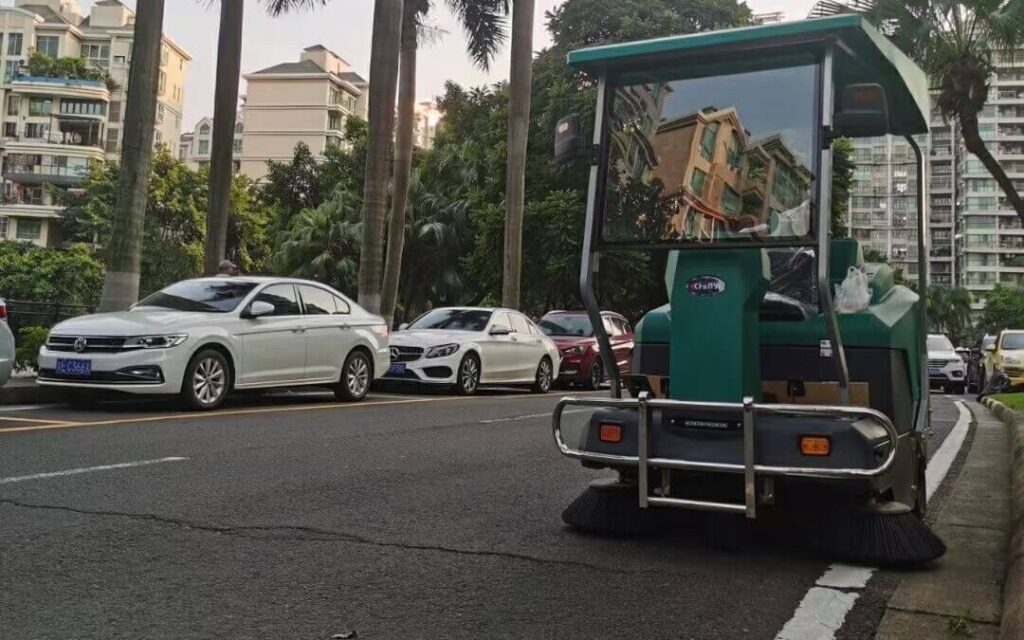
- Industrial sweepers are becoming standard equipment in warehouses and outdoor facilities
- Facility managers increasingly want one-stop cleaning solutions, not single machines
What’s interesting is that distributors are no longer just asking, “What machine do you have?”
They ask us:
- Can you supply consumables long-term?
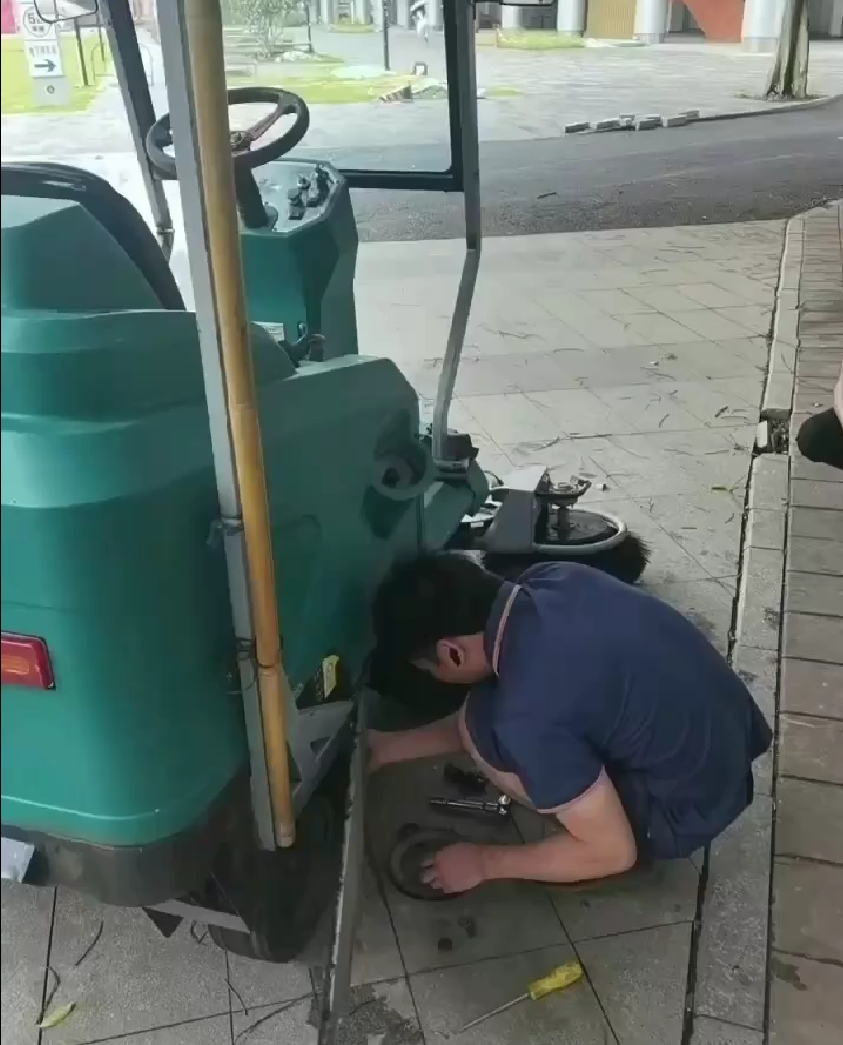
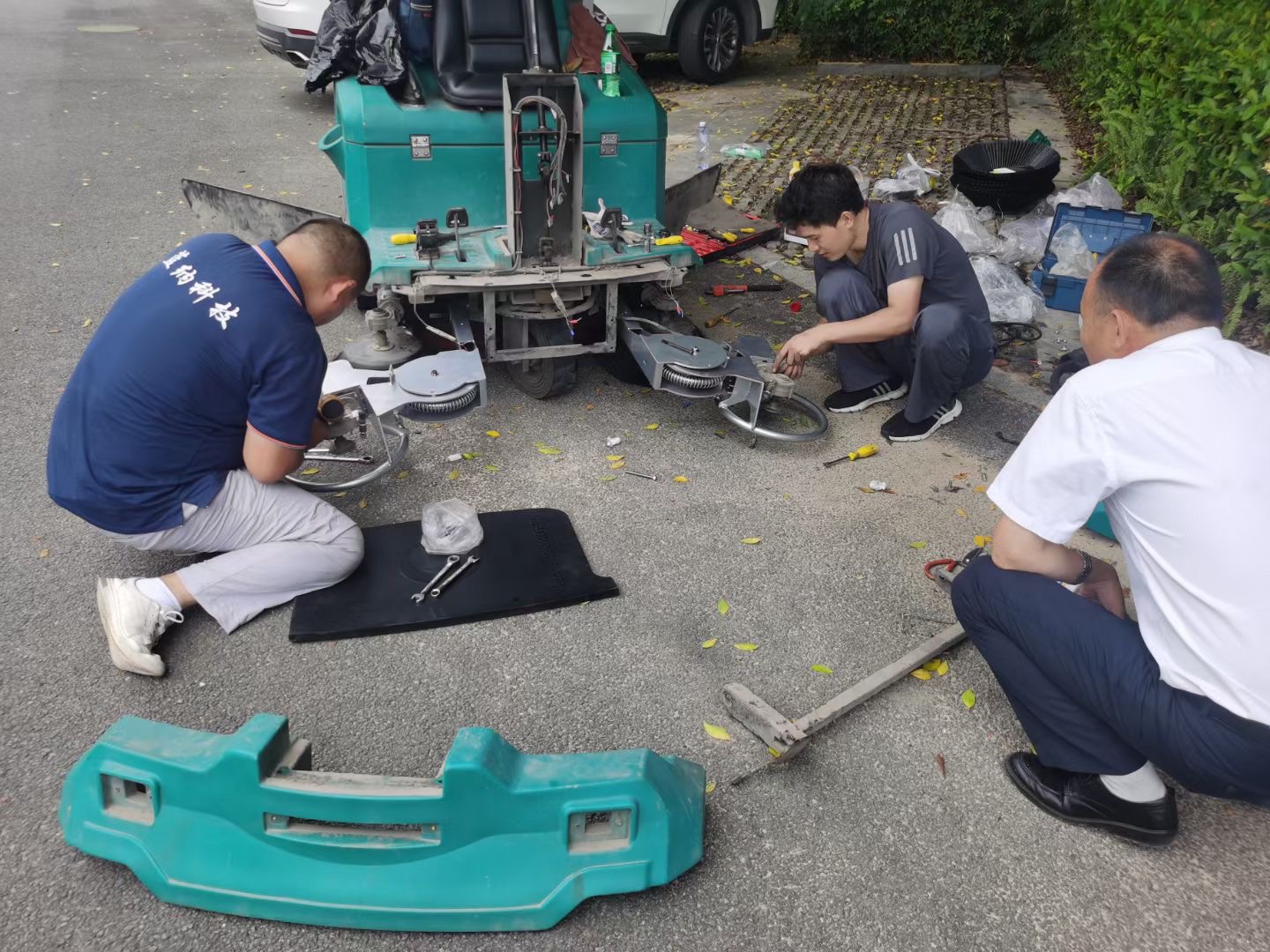
- Can you support local after-sales service?
- Can we build a repeat business model, not one-off sales?
That shift is exactly why this market is becoming more attractive — and more professional.
Product Composition for Floor Cleaning Machine Distributors
This is where many articles stay vague. I want to be very specific, because product structure directly determines distributor profitability.
1. Floor Cleaning Machines (Main Revenue Source)
For most distributors we work with, machines are still the main revenue driver, especially in the early stage.
The core categories usually include:
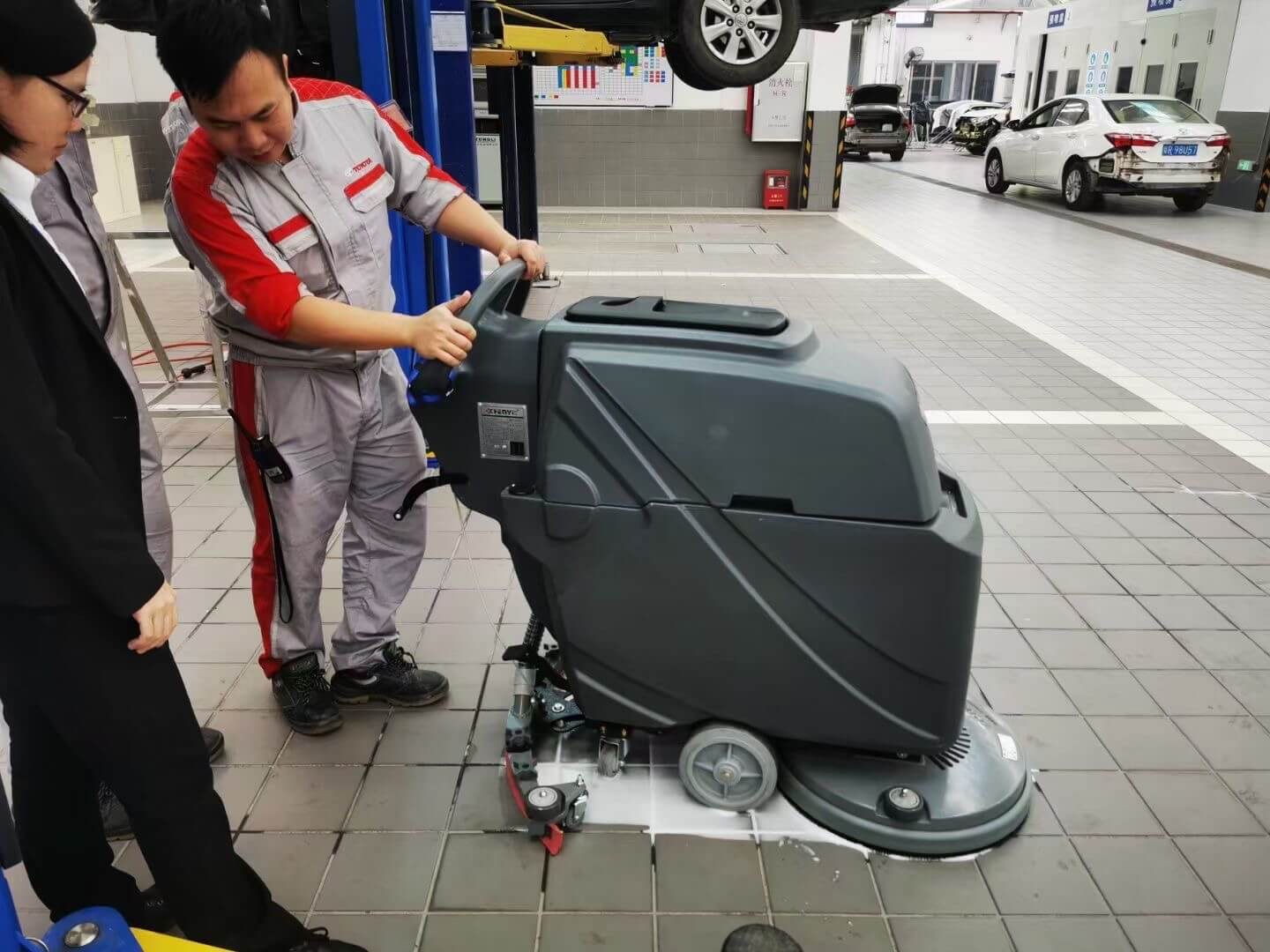
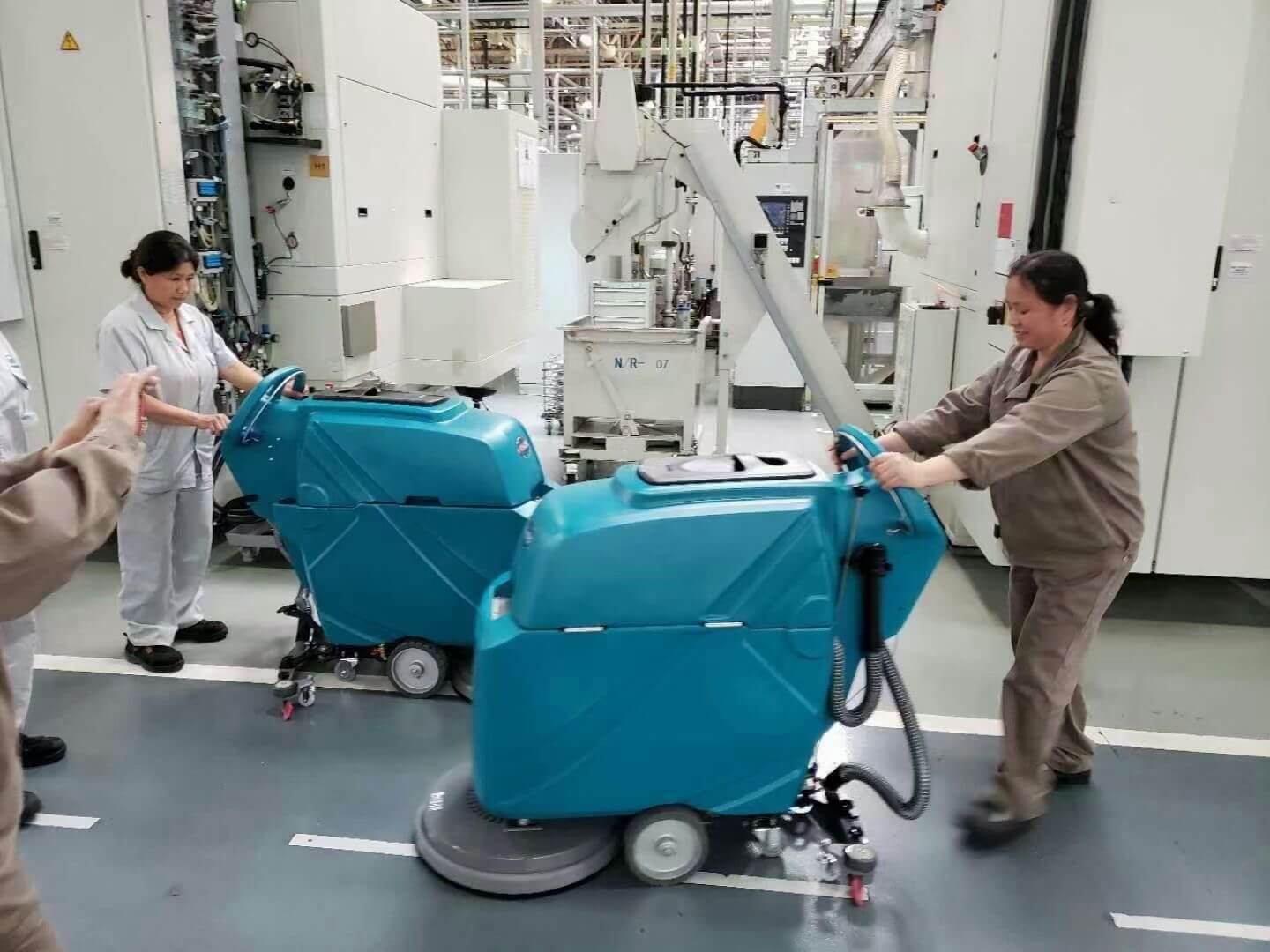
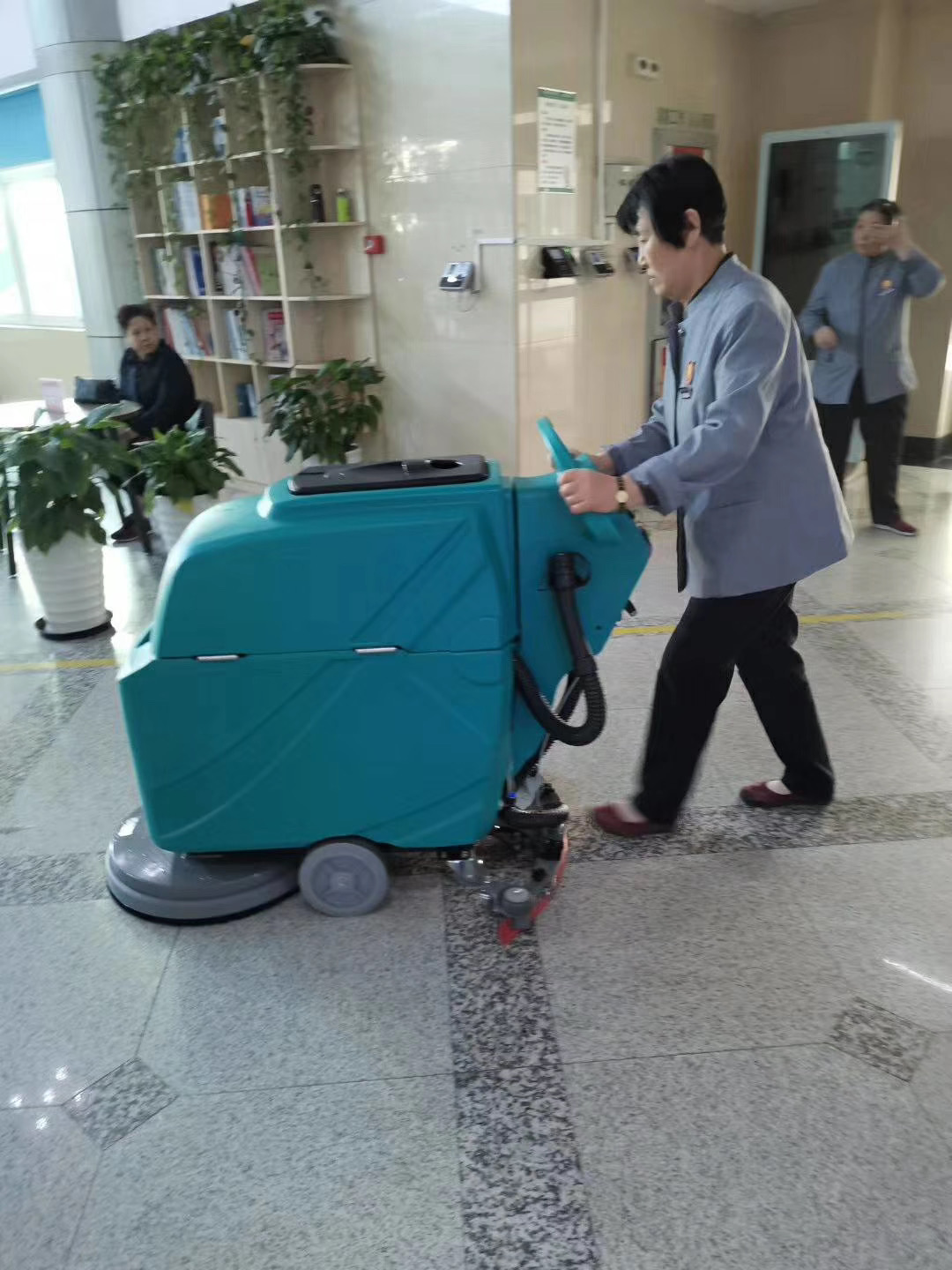
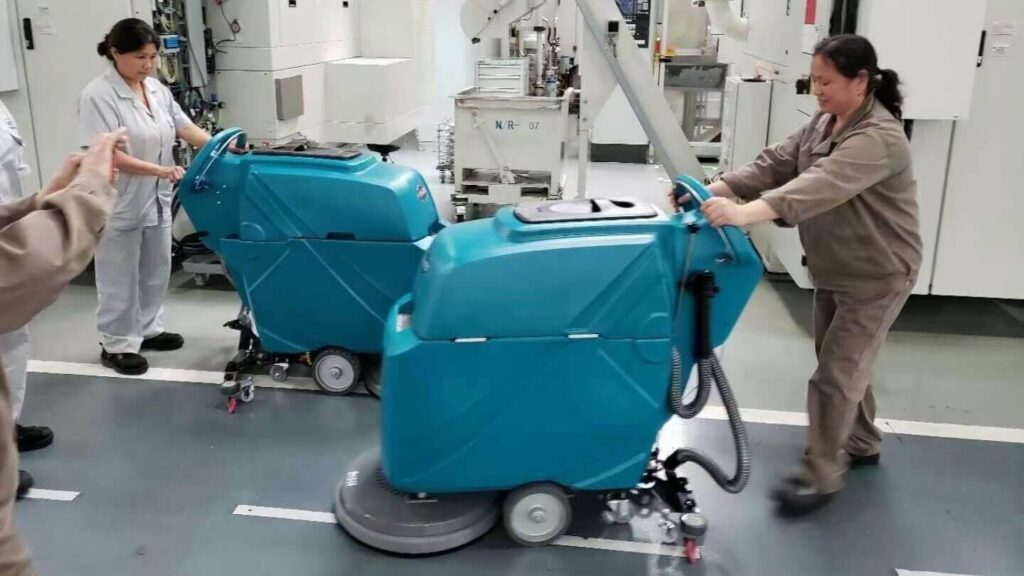
- Walk-behind floor scrubbers
Ideal for supermarkets, schools, hospitals, and medium-sized factories. Lower entry cost, easier training. - Ride-on floor scrubbers
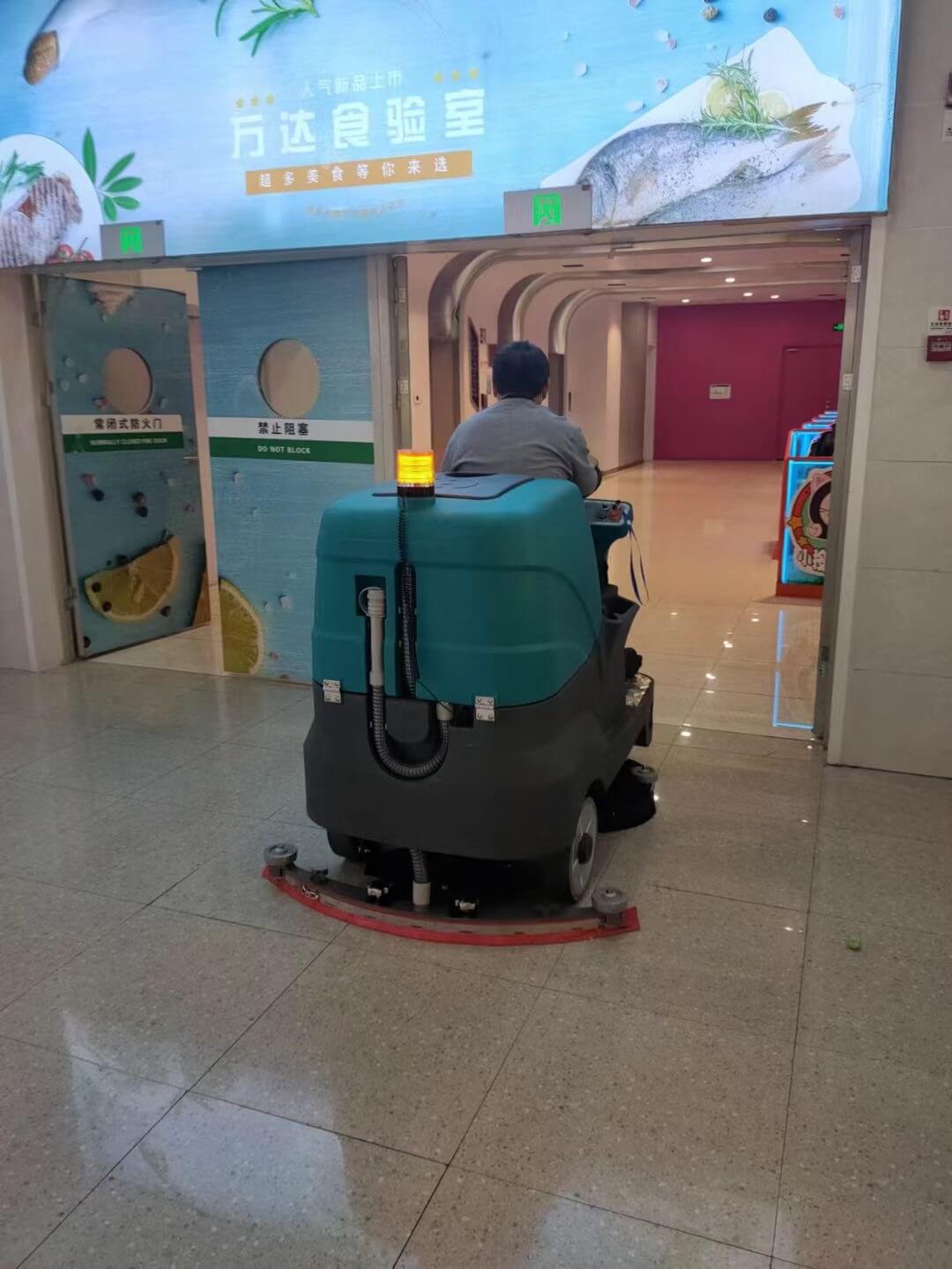
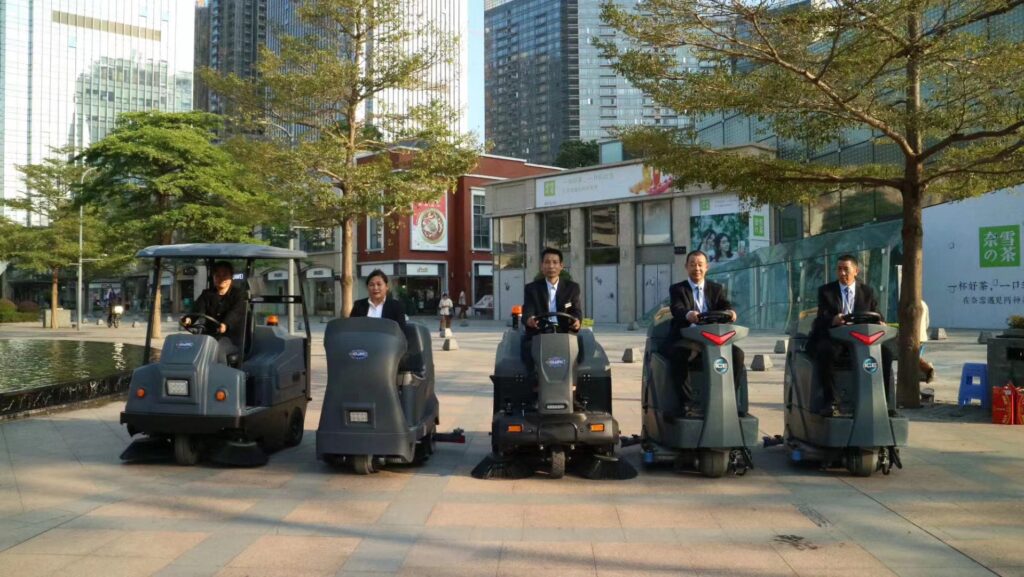
Essential for warehouses, large production plants, and logistics centers. High efficiency, higher ticket value. - Industrial sweepers
Widely used in factories, parking lots, and outdoor industrial areas. Dust control and debris collection are key selling points. - Combination scrubber-sweepers
Popular in heavy-duty industrial environments where both sweeping and scrubbing are required.
From a manufacturer’s perspective, we clearly see the difference between:
- Commercial usage → lighter duty, quieter operation, compact design
- Industrial usage → higher power, reinforced chassis, longer working hours
Distributors who understand these distinctions sell more accurately — and deal with fewer complaints later.
2. Consumables & Cleaning Supplies (Recurring Profit)
This is the part 90% of competitors either ignore or underestimate — but experienced distributors never do.
Every floor cleaning machine consumes parts. Always.
The most common high-frequency consumables include:
- Brushes (disc brushes, roller brushes)
- Squeegees
- Filters
- Pads
- Cleaning chemicals
Here’s something I often tell new partners:
“Machines bring customers in. Consumables keep them with you.”
Why does this matter so much?
- Consumables require regular replacement
- Customers usually prefer original or compatible parts
- Orders are smaller but repeat frequently
From what we’ve seen, distributors who actively manage consumables enjoy much more stable cash flow, even during slow equipment sales periods.
Cost Structure for Floor Cleaning Equipment Distributors
Let’s talk numbers — but like insiders do. No fake precision, only realistic ranges.
From our distributor partners’ feedback, total cost structure usually looks like this:
- Equipment purchase cost: 55–70%
This includes machines sourced from a floor cleaning machine manufacturer like us. - Import & logistics cost: 8–15%
Freight, customs, local transportation — often underestimated at the beginning. - After-sales service cost: 5–10%
Technicians, spare parts stock, warranty handling. - Inventory & warehousing: 3–6%
Machines + consumables storage. - Marketing & local sales cost: 5–10%
Sales team, demos, exhibitions, digital marketing.
What I’ve learned personally is this:
Distributors who fail usually misjudge after-sales and inventory costs, not machine prices.

Gross Margin Analysis (Equipment vs Consumables)
This is where the business logic becomes very clear.
Machines
- Typical gross margin: 20–35%
- Competitive pricing pressure
- Longer sales cycles
- Higher working capital requirement
Consumables
- Typical gross margin: 40–60%
- Faster turnover
- Repeat orders
- Lower logistics risk
One very real sentence I always stand by:
“For most distributors, consumables contribute a higher gross margin than machines.”
The smartest distributors we work with don’t fight for every extra percent on machines — they focus on locking in consumable demand.
Net Profit Structure for Industrial & Commercial Distributors
After all costs, what really matters is net profit.
Across different regions and business scales, we usually see:
- Typical net profit margin: 10–18%
Distributors who consistently hit the higher end share common traits:
- A complete product portfolio (machines + consumables)
- Strong local after-sales service
- Long-term customer relationships
- Clear focus on lifetime customer value, not single deals
I’ve personally seen distributors double their net profit without increasing machine sales — simply by optimizing consumables and service contracts.
Why Choosing the Right Floor Cleaning Machine Manufacturer Matters
This is where I speak not as a marketer, but as someone inside a factory.
From a distributor’s point of view, the manufacturer you choose shapes your entire business model.
The right partner offers:
- Factory direct pricing
Healthy margins without constant price wars. - OEM/ODM flexibility
Branding, configuration, voltage, compliance — all adapted to your market. - Stable supply of machines and consumables
No broken promises, no waiting months for spare parts. - Technical support
Training, documentation, real engineers — not just salespeople.
When distributors tell us they switched manufacturers, it’s rarely about price alone.
It’s about trust, continuity, and long-term profitability.
Conclusion
If there’s one message I hope you take from this article, it’s this:
“A professional floor cleaning machine manufacturer with a complete product portfolio is the key to long-term distributor profitability.”
This industry rewards those who think beyond machines — who understand cost structure, margins, consumables, and partnerships.
From my personal experience, when distributors succeed, manufacturers succeed too. And when both sides focus on building a real business instead of chasing quick wins, the results last for years.
If this article helped you see the business more clearly, then it has done exactly what I hoped it would.