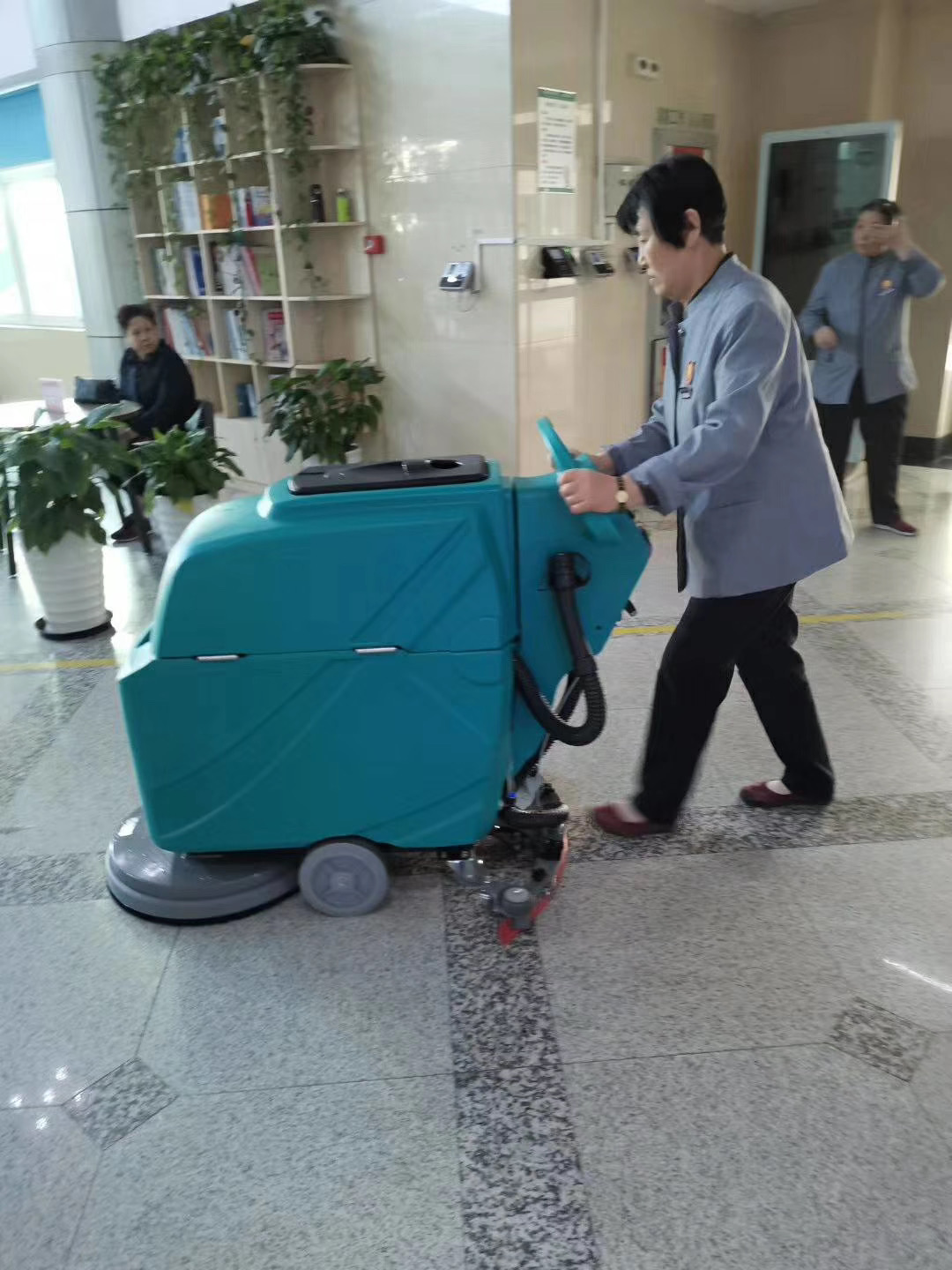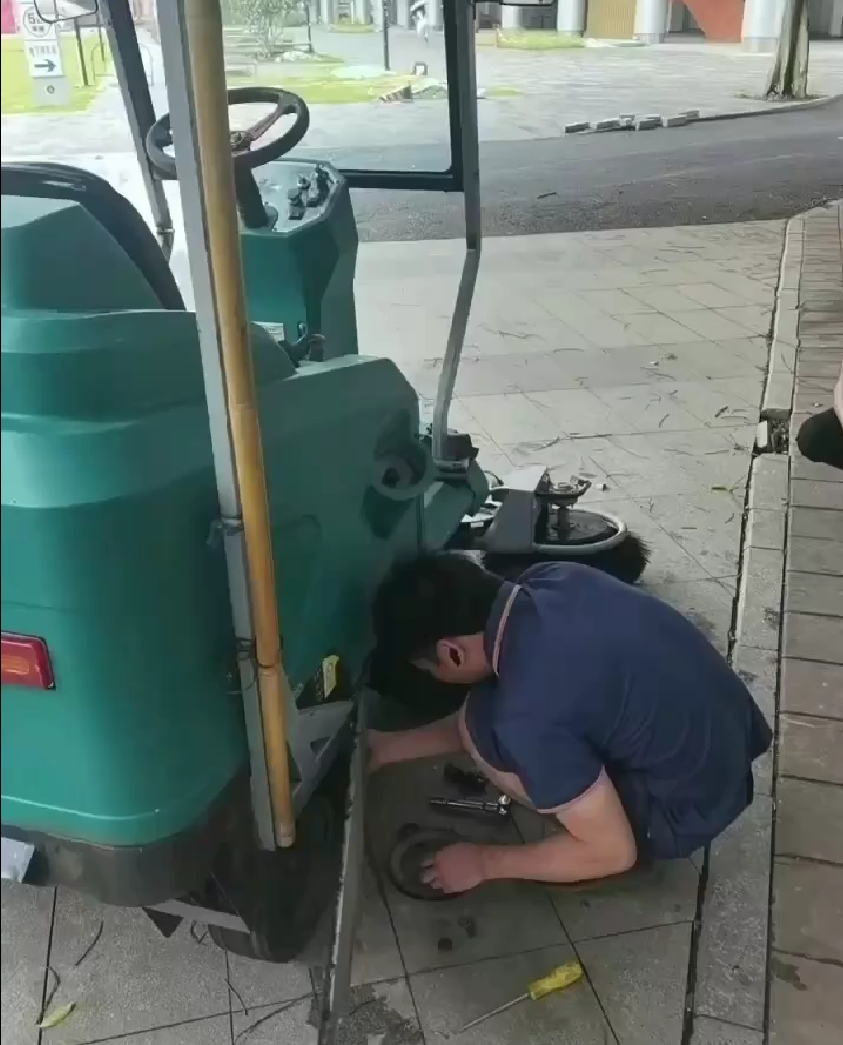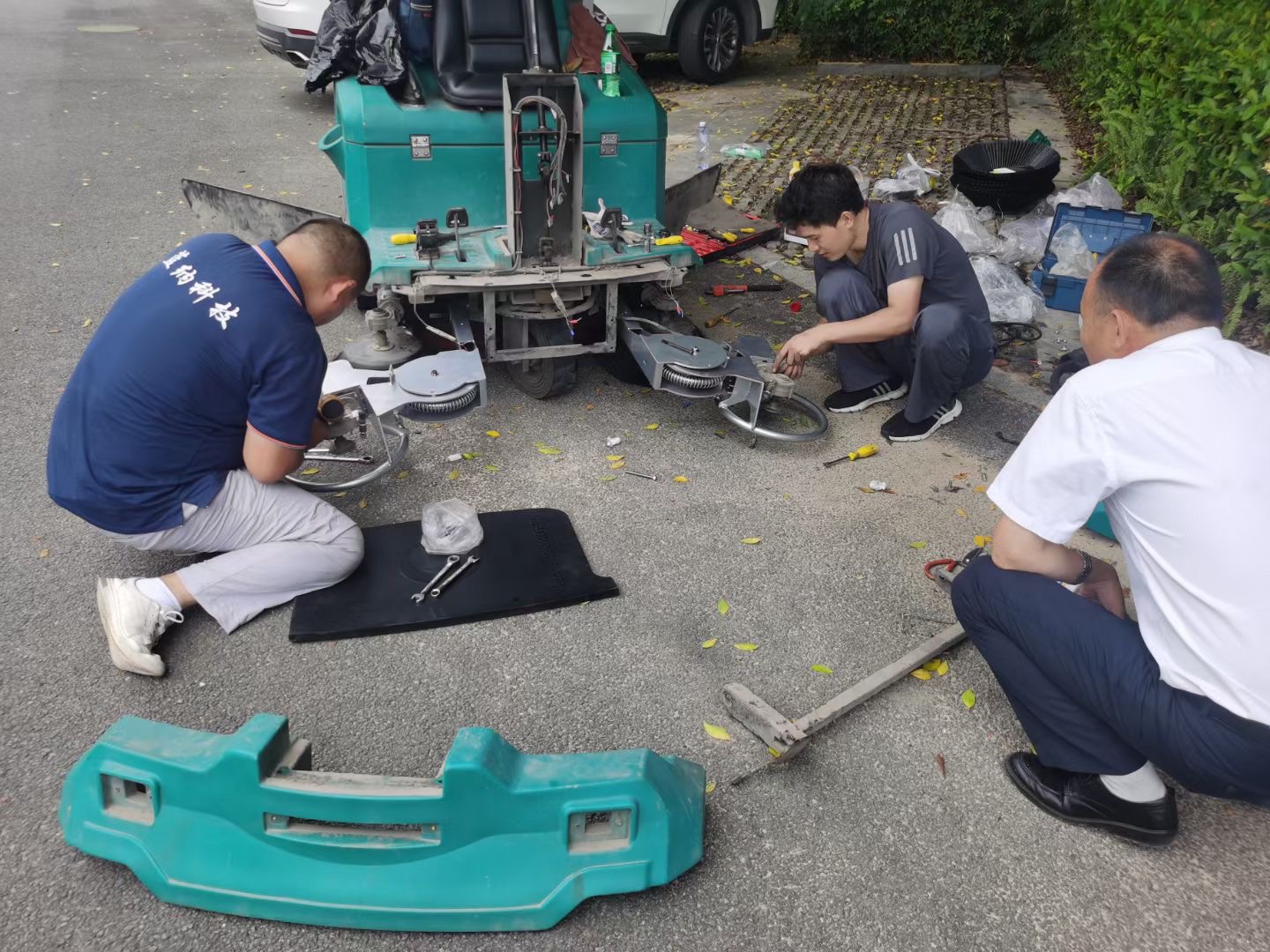
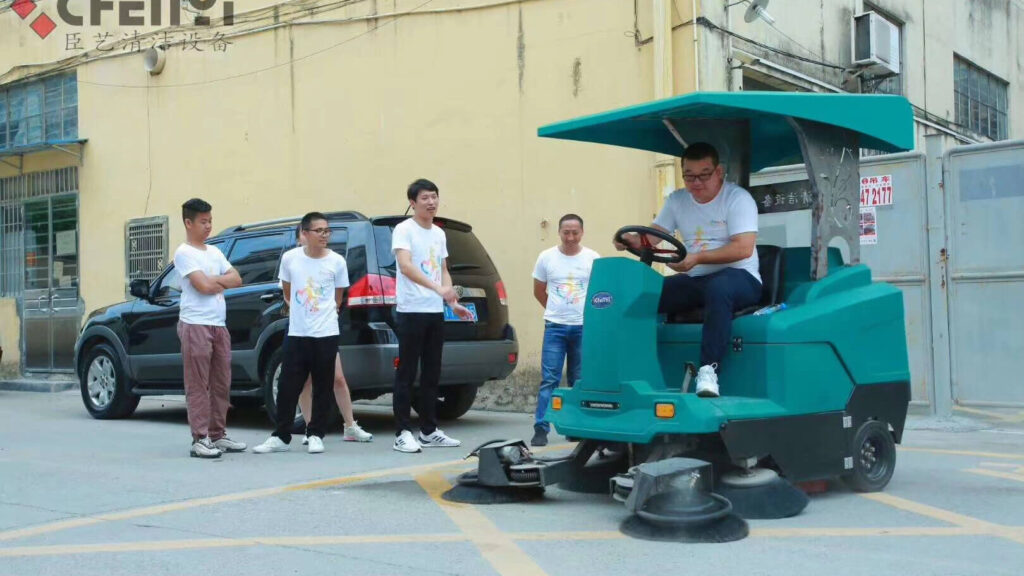
If you’ve ever walked into a real floor cleaning machine factory, you recognize it instantly—the smell of metalworking, motors running on aging racks, freshly molded tanks stacked along the walls, and engineers debating torque curves in front of CAD screens.
I’ve spent years inside these environments. And when overseas buyers ask me, “Why are industrial floor cleaning machines so expensive?” my answer is always the same:
Because durability is engineered at every step—from raw materials to final torque settings.
Today, I want to take you inside what truly happens in a professional factory. If you’re a distributor, brand owner, or procurement manager in the cleaning equipment industry, understanding this process will help you quickly determine whether a manufacturer is merely commercial-grade—or genuinely industrial-grade.
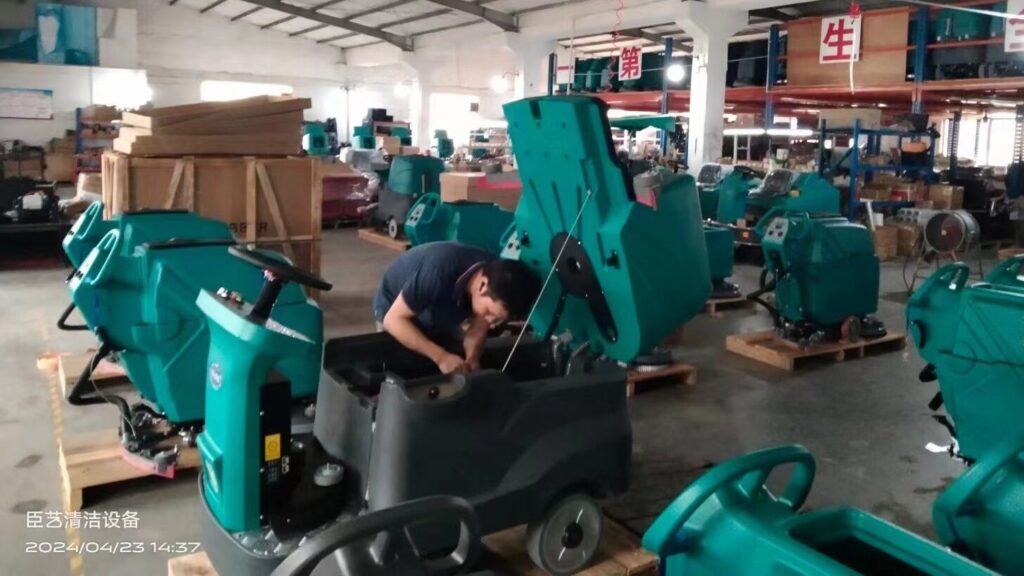
1. Why Industrial Buyers Demand Higher Durability
Many first-time buyers underestimate how harsh real industrial environments are.
Industrial facilities typically expose machines to:
- Rough concrete floors
- Sharp debris such as metal shavings, sand, and stones
- Long daily operating hours (8–12 hours per shift)
- Frequent impacts from forklifts, pallets, and carts
- Aggressive cleaning chemicals that degrade low-grade plastics
- Moisture and humidity that damage poorly protected electronics
Commercial machines are not designed for this reality.
They may look similar on the outside, but internally they lack the structure, torque reserve, material thickness, and protection required for industrial use.
That’s why industrial buyers need machines built with higher-power motors, thicker steel frames, rotomolded tanks, sealed electronics, and reinforced brush decks.
And that’s exactly why choosing the right industrial floor cleaning equipment manufacturer matters so much.
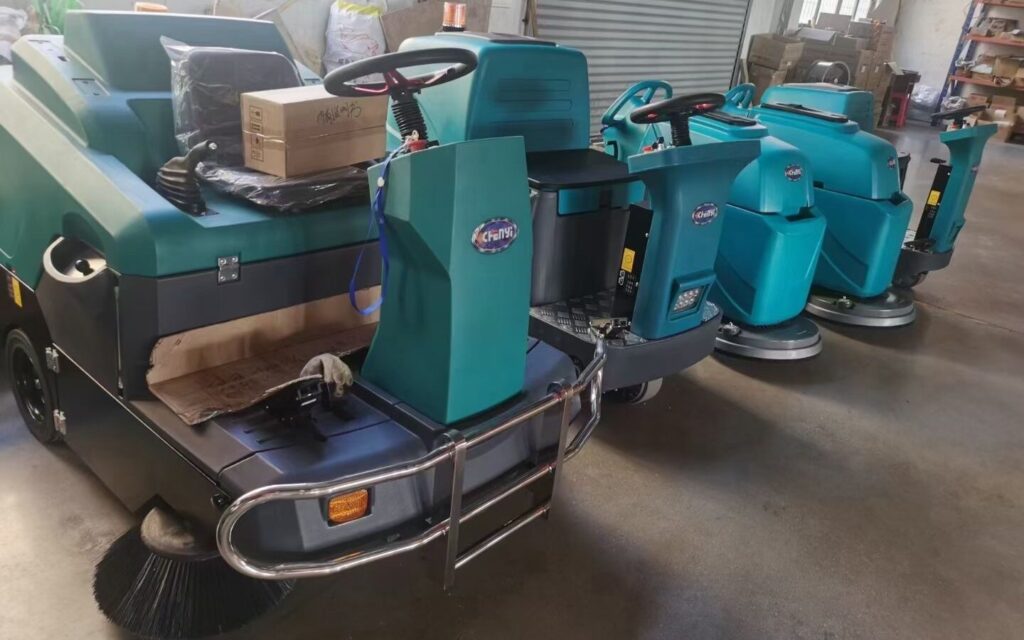
2. Engineering & R&D: Where True Durability Begins
A good factory assembles machines.
A great factory designs machines.
2.1 Structural Strength Analysis (FEA)
Before production begins, engineers run finite element analysis (FEA) to simulate:
- Frame deformation under full load
- Torque impact on brush decks
- Stress concentrations at squeegee mounts
- Wheel and axle load distribution
This ensures the machine won’t twist, crack, or fatigue—even after thousands of operating hours.
2.2 Motor Power & Torque Engineering
I’ve watched engineering teams debate for hours whether a brush motor should deliver 350W or 420W. Why?
Because torque determines:
- Cleaning performance
- Brush pressure stability
- Ability to handle rough surfaces
- Motor lifespan
A typical commercial motor may last 400–600 hours.
A properly engineered industrial motor should last 1,500–2,000 hours.
Those extra hours don’t come from luck—they come from engineering.
2.3 Industrial Waterproofing Standards
Professional manufacturers protect electronics with:
- IP67-rated connectors
- Sealed wiring channels
- Double-coated PCBs
- Fully enclosed, moisture-proof control housings
This is why industrial machines survive wet, chemical-heavy environments.
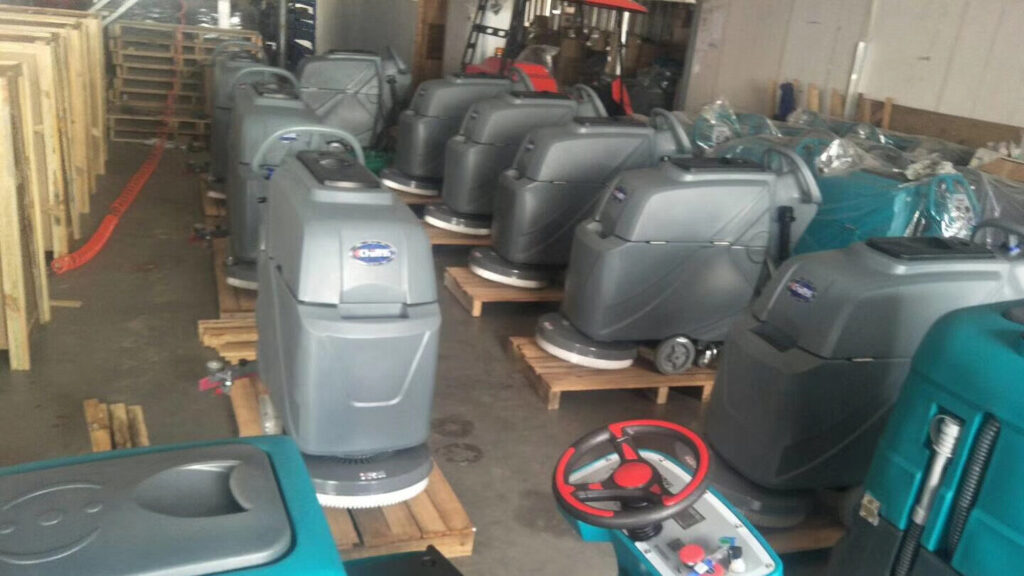
3. A Professional Factory Doesn’t Do Everything In-House—and That’s a Good Thing
This is a point many buyers misunderstand.
3.1 Serious Manufacturers Use Specialized Long-Term Suppliers
A truly professional factory does not attempt to manufacture every component internally. Instead, it partners with:
- Specialized motor manufacturers
- Professional wiring harness suppliers
- Certified bearing and seal producers
However, the key difference is this:
The factory controls the design, material standards, performance requirements, and inspection criteria.
Outsourcing is only safe when the manufacturer enforces strict engineering standards and quality control at every stage.
3.2 Quality-Focused Factories Don’t Constantly Pressure Suppliers on Price
Factories that care about long-term reliability do not endlessly force suppliers to cut prices.
Why?
Because stable quality requires:
- Consistent materials
- Stable manufacturing processes
- Long-term supplier relationships
A professional manufacturer understands that squeezing suppliers for short-term savings almost always leads to inconsistent quality and hidden failures.
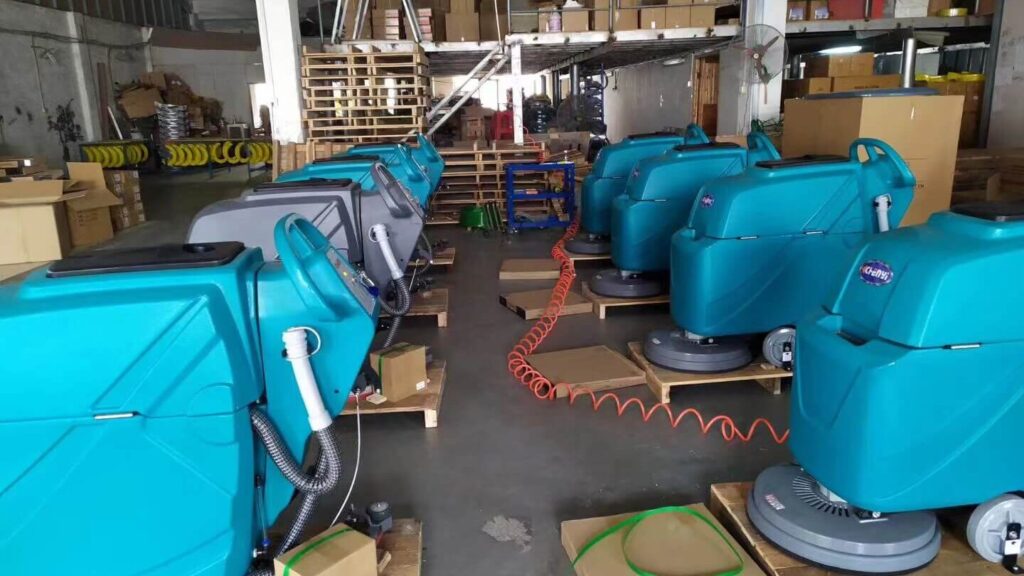
3.3 Supplier Stability Protects Long-Term Spare Parts Availability
This is where the real difference shows up—years later.
A well-managed factory can still provide:
- Original, high-quality spare parts
- Fully compatible replacement components
- Reliable after-sales support
Even many years after the machine was sold.
By contrast, factories that constantly switch suppliers to chase the lowest price often face a serious problem:
- Different batches use different components
- Parts are not interchangeable
- Documentation is incomplete or inconsistent
In extreme cases, the factory itself no longer knows which supplier produced which part.
The result?
- Machines that still exist—but cannot be serviced
- After-sales support that becomes impossible
- Brand reputation damage that cannot be repaired
In industrial equipment, this is one of the most dangerous hidden risks buyers face.
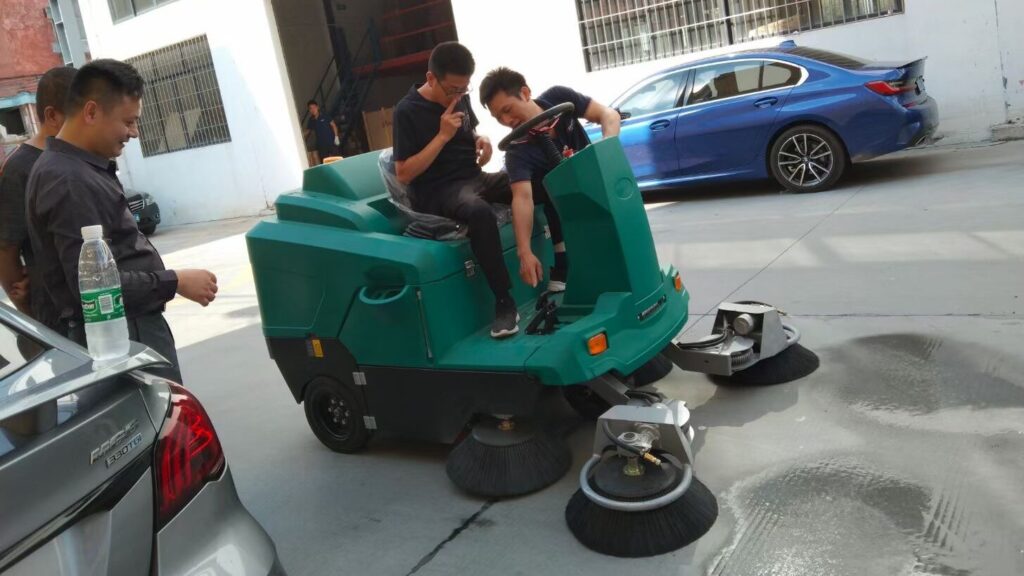
4. Water Tanks & Molding: Where Corners Are Often Cut
4.1 Rotational Molding (Industrial Grade)
Industrial machines use rotomolded tanks with:
- 5–8 mm wall thickness
- No welded seams
- High impact resistance
- Excellent chemical durability
4.2 Injection Molding (Commercial Grade)
Commercial tanks are typically:
- 2–3 mm thick
- Prone to cracking
- Easily deformed under long-term stress
Professional manufacturers almost always choose rotational molding for industrial equipment.
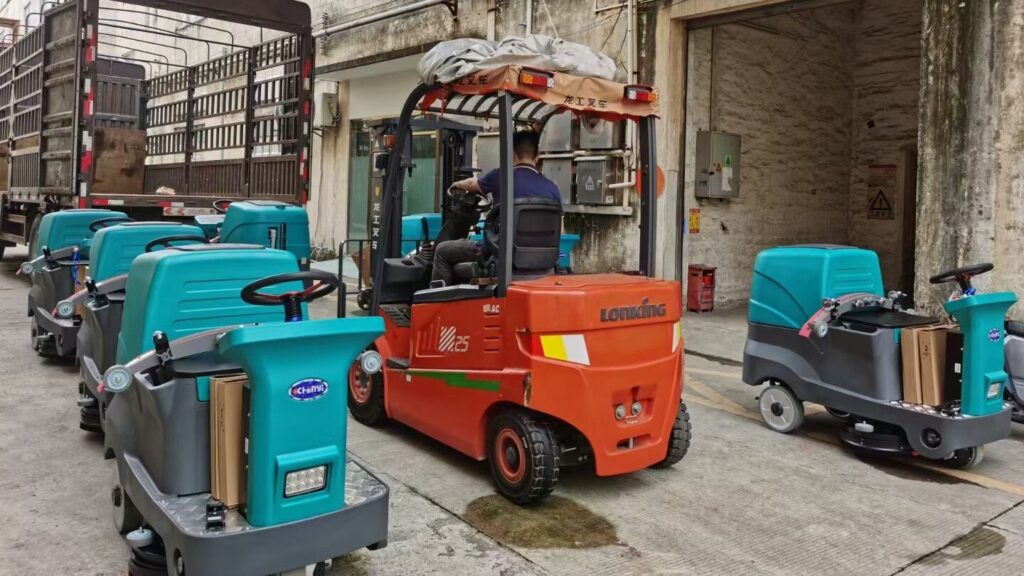
5. Assembly & Testing: Where Real Quality Is Proven
Inside a serious factory, quality is controlled through:
- Precision assembly fixtures
- Digitally torque-controlled fastening
- Serial numbers and component traceability
- 48-hour aging tests
- Vacuum, water recovery, noise, and temperature rise tests
Commercial machines often receive only a few minutes of basic functional testing.
Industrial machines are systematically verified.
6. How to Evaluate a Truly Professional Floor Cleaning Machine Manufacturer
Here’s the checklist I personally use:
✔ In-house mechanical and electrical R&D
✔ Control over molds and core design
✔ Stable, long-term supplier relationships
✔ Refusal to sacrifice quality for short-term cost
✔ Full spare parts and after-sales support system
✔ Ability to supply original components years later
If a factory meets all of these criteria, you’re looking at a true industrial-grade manufacturing partner.
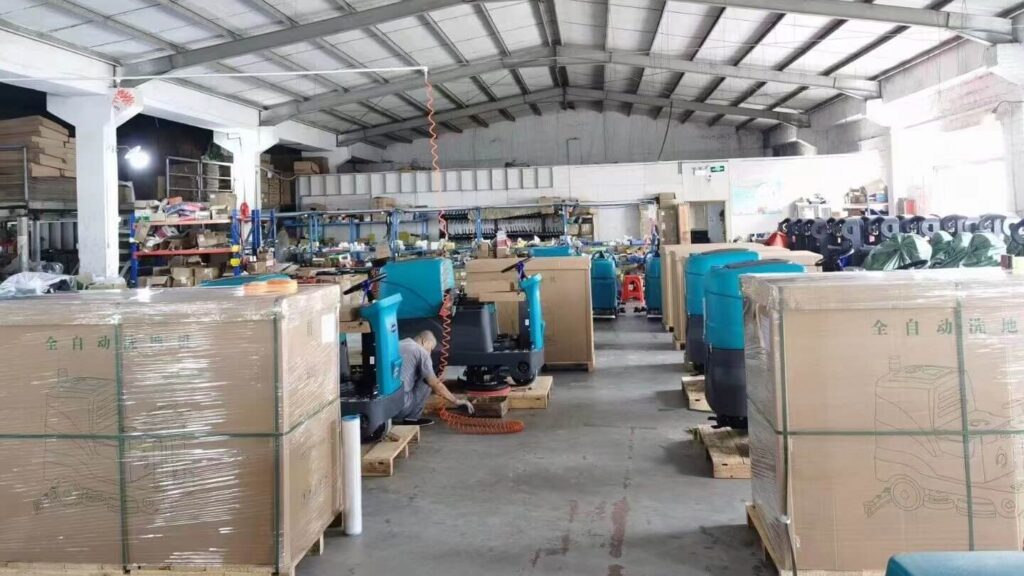
Final Thoughts
When you step inside a real floor cleaning machine factory, you don’t judge it by size or headcount.
You judge it by:
- Engineering discipline
- Supply chain stability
- Material consistency
- Testing rigor
- Long-term service capability
Choosing a manufacturer is never just a cost decision.
It’s a long-term risk management decision.