Over the years, working as a professional floor cleaning machine manufacturer, I’ve had countless conversations with distributors who told me the same thing:
“We sell machines, but after-sales is killing our profits.”
Some said it quietly.
Some said it with frustration.
Some realized it only after years of hard work.
From the outside, their businesses looked busy—machines moving, orders coming in, customers calling. But behind the scenes, after-sales costs were slowly eating away their margins.
As a floor cleaning equipment factory, we see this pattern again and again. The distributors who struggle are not bad at sales. They are simply paying too much for problems they could have prevented.
In this article, I want to share practical, real-world ways to reduce after-sales costs in floor cleaning equipment distribution—not theory, not marketing talk, but lessons learned from working with distributors across different markets.
If you’re selling scrubbers, sweepers, or industrial cleaning machines, this article is for you.
Why After-Sales Costs Are the Silent Profit Killer
Many distributors underestimate after-sales costs because they don’t show up immediately.
When you sell a machine, the margin looks fine.
Six months later, the phone starts ringing.
From our experience as an industrial floor cleaning solutions manufacturer, after-sales costs usually come from:
- Spare parts replacements
- Technician labor
- Travel and logistics
- Warranty disputes
- Customer misuse
- Poor machine matching
Individually, each issue looks small. Together, they can turn a profitable sale into a loss.
The First Hard Truth: Not All Sales Are Good Sales
This may sound uncomfortable, but it’s important.
Some machines should not be sold to some customers.
One of the biggest after-sales cost drivers we see is wrong product matching.
Distributors often sell:
- Entry-level machines to heavy-duty users
- Small scrubbers for large areas
- Machines without proper operator training
The result?
- Overloaded machines
- Premature failures
- Angry customers
- Endless service calls
As a commercial floor cleaning equipment supplier, we’ve learned that reducing after-sales cost starts before the sale, not after.

Mistake #1: Over-Relying on Entry-Level Machines
Entry-level floor scrubbers and sweepers are popular for one reason: price.
But here’s the reality most distributors learn the hard way.
Entry-level machines generate the highest after-sales workload.
Why?
- Lower tolerance for misuse
- Higher wear rate
- Less experienced operators
- Cost-driven customers with high expectations
From the manufacturer side, we see a clear pattern:
entry-level machines account for a disproportionately high percentage of after-sales cases.
Reducing after-sales costs doesn’t mean stopping entry-level sales—but it does mean controlling the ratio.
Build the Right Product Mix to Protect Your Margins
One thing we often help distributors with is redesigning their product structure.
Here’s a simplified view we share:
| Revenue Source | Profit Margin | After-Sales Risk |
|---|---|---|
| Entry-Level Machines | Low–Medium | High |
| Mid-Range Machines | Medium | Medium |
| Premium Machines | High | Low |
| Spare Parts | High | Low |
| Consumables | Very High | Very Low |
| Service Contracts | Medium–High | Controlled |
Distributors who rely only on machine sales are exposed.
Those who balance machines + parts + consumables are much more stable.
As an industrial floor cleaning solutions manufacturer, we strongly believe that structure matters more than volume.
Mistake #2: No Clear Warranty Boundaries
Another major source of unnecessary after-sales cost is unclear warranty policy.
Many distributors try to “be nice” by covering everything.
This almost always backfires.
Common problems we see:
- Damage caused by misuse treated as warranty
- Wear parts replaced for free
- Operator errors blamed on the machine
Without clear boundaries, customers assume everything is free forever.
Successful distributors do something different:
- They explain warranty clearly at the time of sale
- They educate customers on wear parts
- They document handover and training
Clarity reduces conflict.
Conflict is expensive.
Mistake #3: Poor Operator Training (The Hidden Cost)
Let me be honest—many after-sales issues have nothing to do with machine quality.
They are caused by people.
From our experience as a floor cleaning machine manufacturer, poor operator training leads to:
- Battery damage
- Incorrect chemical usage
- Brush and pad misuse
- Sensor errors
- Unnecessary breakdowns
Distributors who invest just a little time in:
- Basic training videos
- Simple user manuals
- On-site handover sessions
…see a dramatic drop in service calls.
Training is not a cost.
It’s insurance.
Mistake #4: No Spare Parts Planning
One of the fastest ways to increase after-sales cost is poor spare parts management.
We often see distributors who:
- Order parts only after breakdowns
- Have long lead times
- Pay high shipping costs
- Keep customers waiting
This creates:
- Emergency logistics
- Angry end users
- Extra labor
- Reputation damage
As a floor cleaning equipment factory, we always encourage distributors to stock critical parts, not everything.
Smart parts planning means:
- Fewer urgent shipments
- Faster repairs
- Lower total cost
- Higher customer satisfaction
How Smart Distributors Actually Reduce After-Sales Costs
From observing our most successful partners, a few clear strategies stand out.
1. They Sell Fewer “Wrong” Machines
They qualify customers properly and say no when necessary.
2. They Push the Right Customers Toward the Right Tier
Heavy users → higher-spec machines
Light users → simpler models
3. They Monetize After-Sales Instead of Absorbing It
Service contracts change everything.
Here’s why service contracts work:
| Model | Cash Flow | Cost Control |
|---|---|---|
| Free After-Sales | Unstable | Low |
| Pay-Per-Service | Irregular | Medium |
| Service Contract | Predictable | High |
4. They Work Closely With Their Manufacturer
Not just for price—but for support, training, and data.
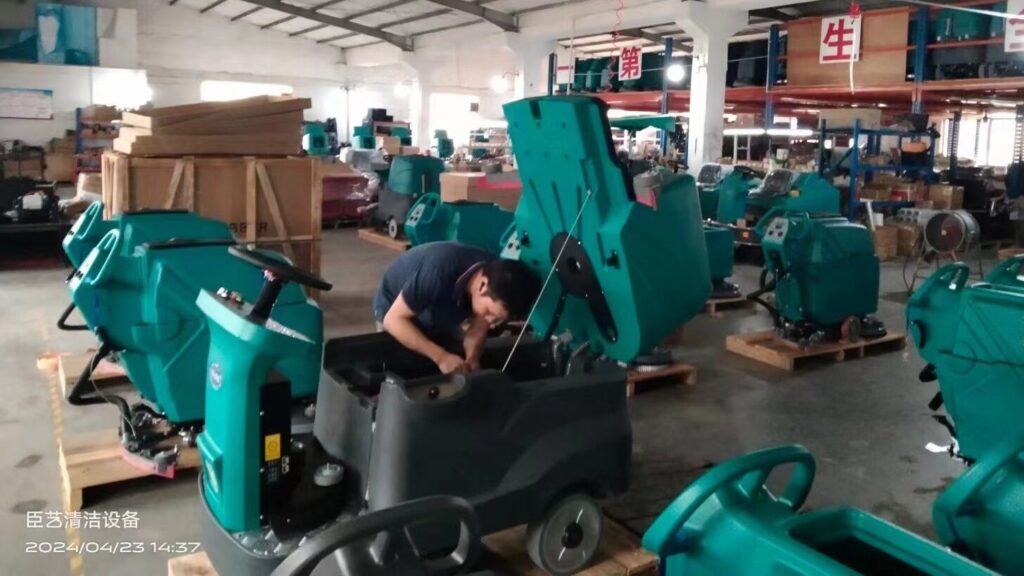
Choosing the Right Manufacturing Partner Matters More Than You Think
This is something many distributors underestimate.
Some manufacturers only care about shipping machines.
Others care about long-term distributor success.
As a professional floor cleaning machine manufacturer, we believe reducing after-sales cost is a shared responsibility.
At www.cleaningbling.com, we focus on:
- Stable product platforms
- Clear parts structure
- Technical documentation
- Distributor training support
- Long-term cooperation, not one-time deals
When manufacturer and distributor work together, after-sales cost goes down for both sides.

A Personal Observation From Years in the Industry
I’ve seen distributors sell less and make more money.
I’ve also seen distributors sell more and slowly lose control.
The difference was never effort.
It was always system design.
After-sales cost is not a problem you fix once.
It’s a problem you design out of your business over time.
Final Thoughts: Reduce Costs by Being Intentional, Not Reactive
If you’re serious about reducing after-sales costs in floor cleaning equipment distribution, ask yourself:
- Are we selling the right machines to the right customers?
- Are we educating or just delivering?
- Are we absorbing costs that should be structured?
- Are we working with a manufacturer who supports our growth?
The distributors who win long-term are not the ones with the lowest prices.
They are the ones with the lowest hidden costs.
As an industrial floor cleaning solutions manufacturer, we’ve seen that when distributors take control of after-sales strategy, everything changes—profitability, confidence, and customer relationships.
At www.cleaningbling.com, we believe sustainable growth starts with fewer problems, not more sales.
If this article helped you rethink how after-sales really works, then it has done its job.