Over the years, working inside a professional floor cleaning machine manufacturer, I’ve learned something that I wish every international distributor, brand owner, and facility manager understood earlier:
Durability is not created on the sales brochure.
Durability is created in engineering, in materials, and on the production line — long before the machine reaches your warehouse.
I’ve seen commercial-grade machines fail after six months inside a warehouse, while a well-engineered industrial scrubber runs for five or ten years with only minor maintenance. That difference is not luck — it’s the result of decisions manufacturers make every day.
In this article, I want to share, from my own experience, how a real industrial-level manufacturer ensures long-term durability — and what you should look for when choosing an OEM/ODM partner.
By the end, you should be able to instantly tell whether a supplier truly understands industrial engineering, or if they’re simply assembling “commercial toys.”

1. Why Industrial Buyers Need Higher Durability
If you’re sourcing machines for factories, hospitals, logistics centers, or large supermarkets, you already know the challenge:
Industrial machines face workloads that commercial machines simply cannot survive.
I’ve walked into countless workshops where machines are exposed to:
- metal shavings
- high humidity
- forklift impacts
- rough concrete
- chemical detergents
- long daily shifts
A commercial machine — designed for malls or small shops — can’t handle this. And here’s what usually happens:
- Brush motors burn out because torque is too low.
- Gearboxes fail because shafts can’t handle heavy load.
- Thin tanks crack under weight or vibration.
- Electronics corrode because connectors aren’t sealed.
- Chassis bends after repeated impacts.
If your equipment must survive 3, 5, or even 10 years, then yes — industrial machines are more expensive, but the “expensive” part is exactly what prevents failures.
And it all begins with engineering.
2. R&D & Engineering Design Differences That Shape Durability
This is where a professional floor cleaning machine manufacturer separates itself from simple assemblers.
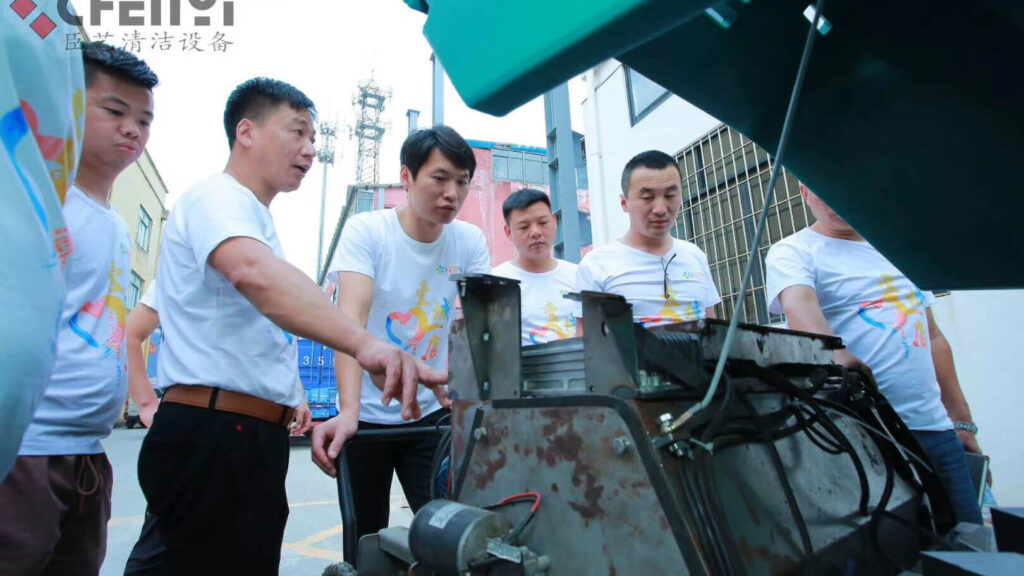
Before we tighten a single screw, our engineering team spends months validating the structure, power system, and waterproofing.
Let me walk you through the technical differences that determine long-term durability.
2.1 CAD Structural Strength Analysis
When we design a new floor scrubber or sweeper, the first thing our engineering team does is run finite element analysis (FEA) in CAD.
We simulate:
- chassis bending
- impact loads
- tank deformation
- long-term vibration stress
- squeegee frame torque
This tells us exactly where to reinforce the body and what steel thickness is needed.
Commercial machines rarely go through this.
Industrial durability starts here.
2.2 Motor Power Calculation Models
A commercial machine might use a 250–300W brush motor, but industrial applications require:
- stronger torque
- larger motor brushes
- better heat dissipation
- reinforced mounting brackets
Our engineering team runs torque simulations to calculate:
- startup load
- ramp incline load
- friction coefficient on rough floors
The result?
A drive system that doesn’t burn out after 500 hours — it lasts 1500+.
2.3 Waterproofing Design & IP Rating
Durability isn’t only about strength — it’s about protecting electronics.
Industrial machines include:
- IP67 waterproof connectors
- sealed PCB control boxes
- coated circuit boards
- rubber cable grommets
- strategic wiring routing
Cheap machines skip these steps, and I’ve seen them fail the moment a worker sprays water too close to the control panel.
2.4 Bearing & Axle Life Cycle Calculations
Brush decks, drive wheels, and squeegees all rely heavily on bearings.
In industrial applications, we calculate:
- radial load
- axial load
- expected service life
- lubrication schedule
- torque resistance
They’re small details, but they determine whether your machine lasts 6 months — or 6-10 years.
2.5 Battery System Engineering (Lithium vs Lead-acid)
Battery selection plays a huge role in durability:
- Lithium (LiFePO4) — long cycle life, stable discharge, low maintenance
- Lead-acid — lower cost, heavy-duty compatibility, predictable performance
We run:
- BMS compatibility tests (for lithium)
- discharge curve mapping
- heat dissipation planning
- wiring and connector sizing
Industrial machines need stable power delivery — otherwise motors overheat and fail prematurely.
3. Water Tank & Mold Manufacturing: A Hidden Foundation of Durability
One of the biggest surprises for new buyers is how much tank quality influences machine lifespan.
Durability starts with the mold.
3.1 Rotational Molding vs Injection Molding
For industrial machines, we use rotational molding (rotomolding) because it provides:
- thick, uniform walls
- strong impact resistance
- no weld lines
- long-term shape stability
Commercial machines often use thin injection-molded tanks, which:
- crack under vibration
- deform under pressure
- cannot support motor weight
If the tank fails, the entire structure becomes unstable.
3.2 Wall Thickness Matters
Our industrial tanks typically have 5–8 mm wall thickness.
Commercial tanks?
Often only 2.5–3 mm.
Thicker tanks support:
- drive motors
- brush motors
- battery weight
- vibration
- impacts
This single difference adds years to the machine’s lifespan.
3.3 Drop & Burst Testing
Before any tank enters production, we perform:
- 1–2 meter drop tests
- hydraulic burst tests
- chemical compatibility tests
If a tank fails here, it would definitely fail in real industrial usage.
4. Raw Materials & Components: The True Cost of Durability
This is where buyers really start to understand why industrial machines cost more — and why they last longer.
Let me break down the components that matter most.
4.1 Industrial Motors vs Commercial Motors
Industrial motors offer:
- higher temperature tolerance
- extended brush life
- stronger torque
- better sealing
- thicker copper windings
Real numbers:
- Commercial motor life: ~500 hours
- Industrial motor life: 1500–2000+ hours
This is why industrial machines don’t stall, overheat, or lose cleaning pressure.
4.2 Steel Chassis Thickness
We typically use:
- 3–6 mm steel plates
- reinforcement ribs
- robot-welded frames
- powder-coated protection
Commercial machines often use plastic frames or 1–2 mm steel, which bend after repeated impacts.
4.3 Industrial Rubber Wheels
Our wheels are designed for:
- oil resistance
- abrasion resistance
- heavy loading
- long-term flattening resistance
This ensures smooth operation even after years of use.
4.4 Gearboxes & Drive Systems
Industrial gearboxes require:
- hardened steel gears
- high-torque tolerance
- sealed lubrication
- precision shafts
Commercial gearboxes simply cannot handle industrial flooring and heavy debris.
4.5 Electrical Connectors
A professional manufacturer always uses:
- waterproof connectors
- heat-shrink terminals
- vibration-proof wiring
- mechanical locking clips
Most machine failures in cheap products come from wiring issues — not mechanical ones.
5. The Assembly & Production Process That Guarantees Durability
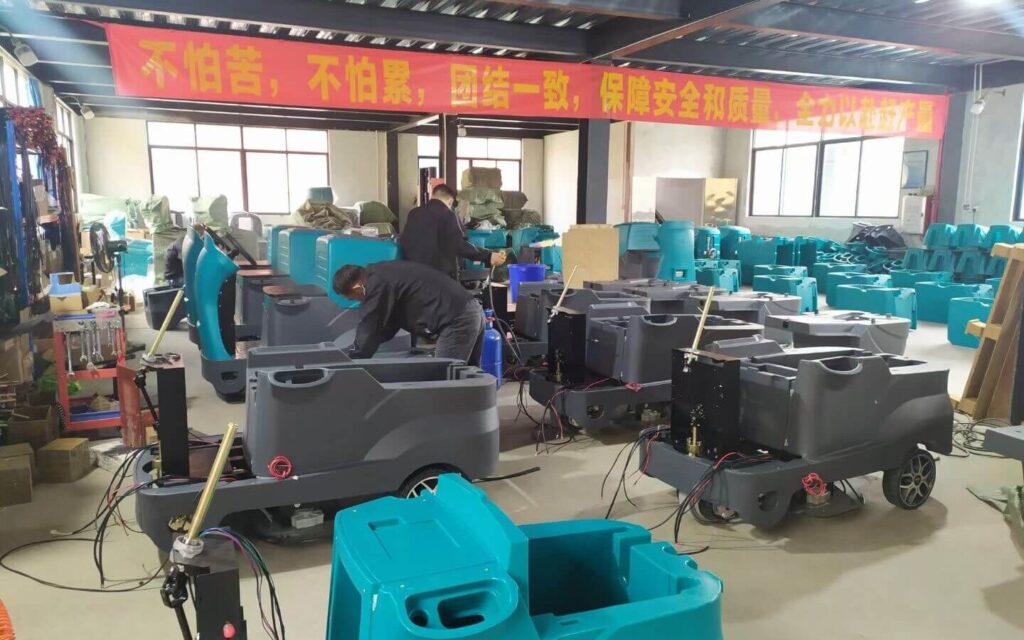
Even the best engineering fails if the assembly process is sloppy.
This is where a professional floor cleaning machine manufacturer truly stands out.
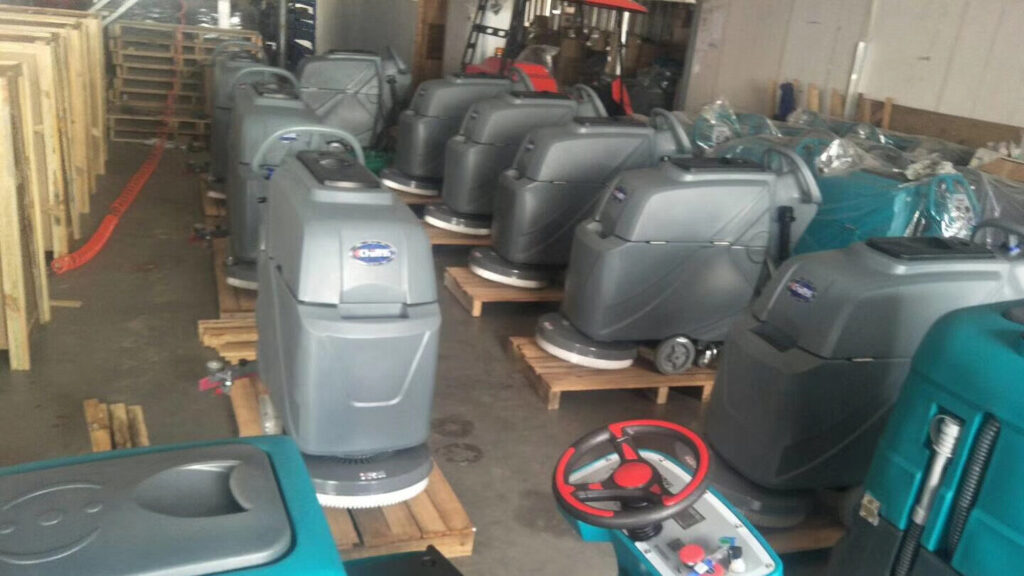
5.1 Dedicated Industrial Fixtures & Jigs
Our assembly line includes:
- motor mounting fixtures
- drive alignment jigs
- tank compression tools
- squeegee frame alignment systems
These tools ensure every machine is built exactly the same.
5.2 Torque-Controlled Assembly
Every screw has a torque standard.
We use:
- digital torque guns
- calibrated wrenches
- torque logs for QC
Why?
Overtightened screws crack tanks; undertightened screws vibrate loose.
This directly affects durability.
5.3 48-Hour Continuous Aging Test
Before shipping, industrial machines go through:
- 48-hour running test
- vibration test
- water flow inspection
- vacuum performance test
- noise measurement
- brush pressure calibration
Commercial machines only do 15–20 minutes of checking.
5.4 Full Quality Traceability
Each machine receives:
- serial number
- assembly record
- component batch IDs
- QC signatures
If any issue occurs months later, we can trace everything.
6. Real Use Scenarios: Why Durability Matters in the Field
Let me share examples from customers.
Factories & Workshops
- oil
- dust
- heavy debris
- long shifts
Only industrial motors and sealed electronics survive this.
Logistics Warehouses
Machines face:
- forklift impacts
- long corridors
- 6–10 hours daily operation
Weak chassis and cheap gearboxes fail quickly.
Supermarkets & Malls
Durability here means:
- quiet operation
- long running time
- safe waterproofing
Commercial machines usually break under constant use.
Hospitals & Schools
Durability means:
- reliability
- low noise
- safe electronics
- chemical resistance
This is where professional engineering is felt immediately.
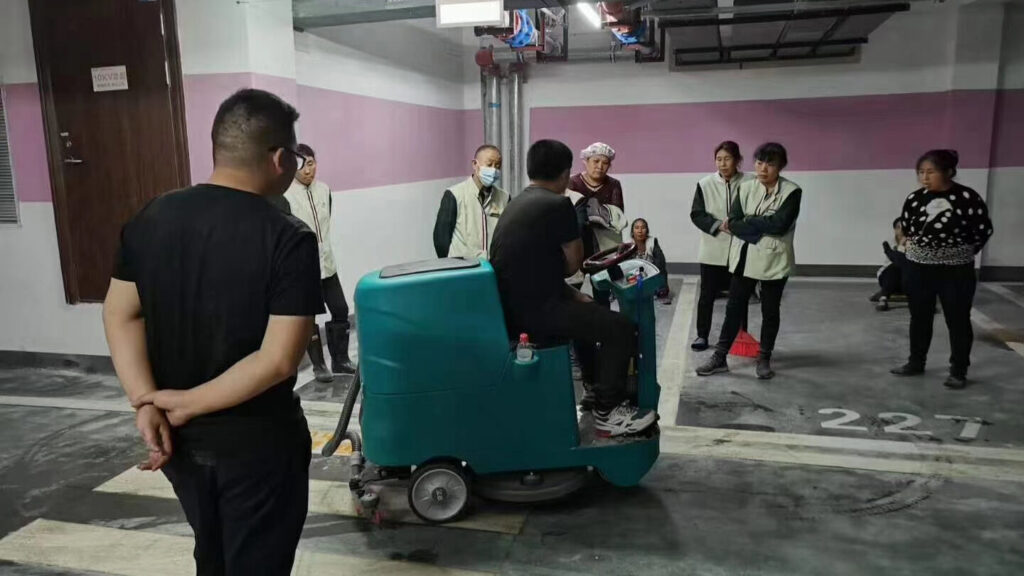
Parking Garages
Machines must handle:
- inclines
- rough concrete
- water pooling
- dust buildup
Poorly sealed electronics fail on day one.
7. How to Choose the Right Manufacturer (High-Value Conversion Section)
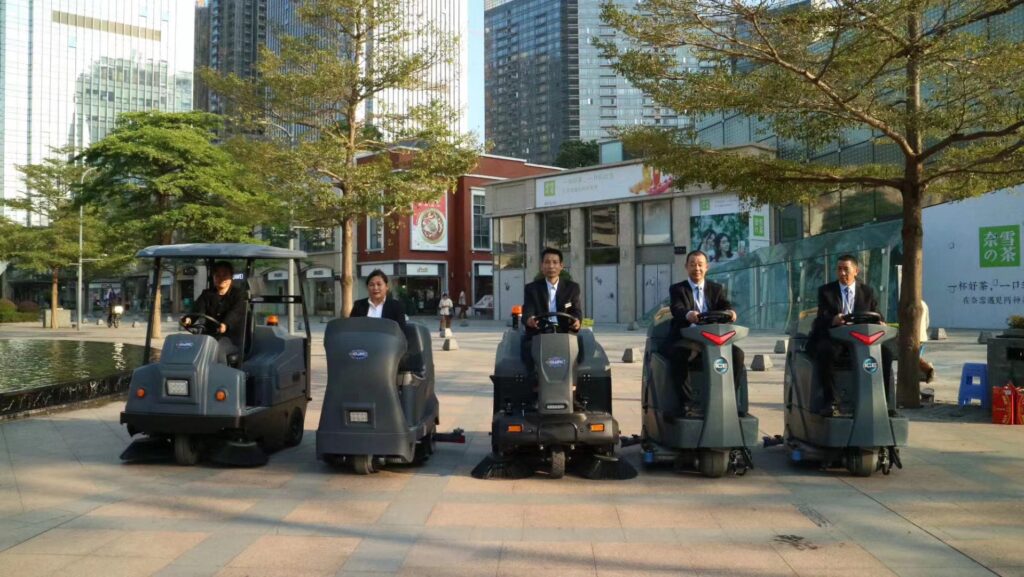
If you are sourcing for distribution, rebranding, or OEM/ODM, here’s how to know whether a manufacturer is truly professional:
✔ They have a real R&D team
Not just “assembly workers.”
✔ They build their own molds
Shows long-term investment and control.
✔ They follow industrial assembly standards
Torque tools, fixtures, QC systems.
✔ They provide traceability and testing reports
This is essential for after-sales service.
✔ They support OEM/ODM for long-term supply
Professional engineering ensures consistency.
✔ They allow factory visits and transparency
Commercial factories always hide something — industrial factories never do.
A reliable partner helps you avoid after-sales headaches and protects your brand reputation.
8. FAQ (SEO-Optimized for SERP Snippets)
Why are industrial floor scrubbers more expensive?
Because they use stronger materials, industrial motors, thicker tanks, sealed electronics, precision assembly, and longer testing processes.
How long can an industrial floor cleaning machine last?
Typically 5–8 years, depending on usage environment and maintenance.
Is a commercial machine suitable for industrial environments?
No — commercial machines are not built for heavy debris, long shifts, or chemical exposure.
How do manufacturers verify durability?
Through FEA analysis, long aging tests, vibration tests, impact tests, and real-field case studies.
What proves a manufacturer is professional?
R&D strength, mold development ability, industrial materials, strict QC, and documented processes.
Final Thoughts
If there’s one truth I’ve learned from years inside the industry, it’s this:
Long-term durability is never an accident. It’s engineered, tested, and proven.
When you choose a manufacturer with real industrial standards, you aren’t just buying a machine — you’re buying reliability, fewer breakdowns, lower maintenance, and stronger profit margins.
I hope this article gives you the clarity you need to evaluate suppliers with confidence. And if you ever want help comparing manufacturers or developing an OEM/ODM line, my team and I are always here to share everything we’ve learned.