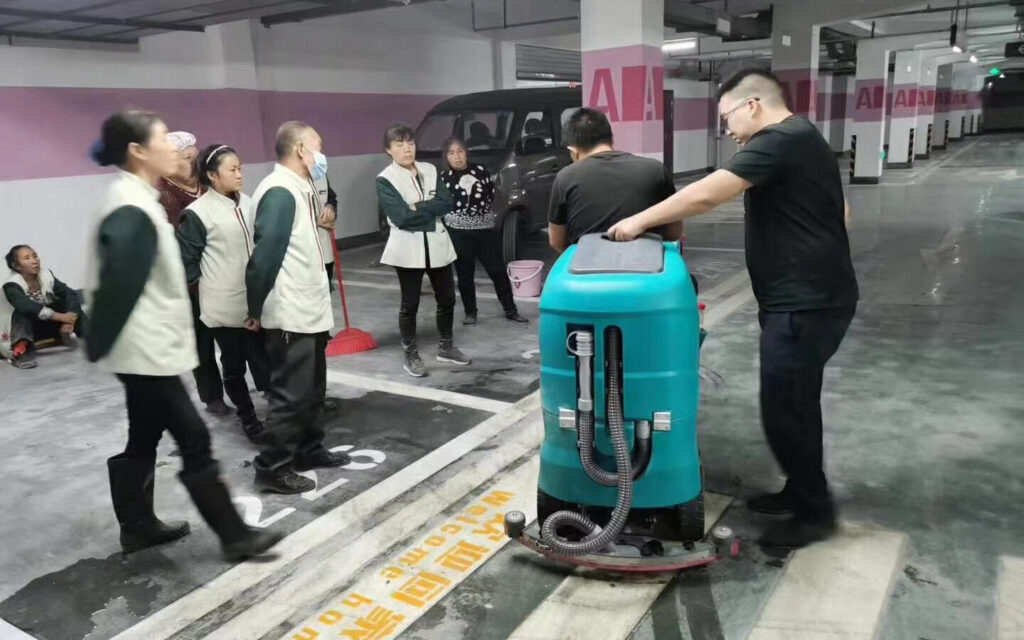
If you are a floor cleaning machine distributor or dealer, chances are you didn’t enter this business just to move boxes.
You entered it to build:
- Stable margins
- Long-term customer relationships
- A product line that grows year after year
But here’s something I’ve learned from working closely with industrial and commercial floor cleaning machine distributors across different markets:
👉 Most profit problems don’t come from sales — they come from poor portfolio and supplier decisions.
This article is written from real experience.
Not from theory, not from spreadsheets alone, but from seeing distributors struggle — and seeing others quietly outperform their competitors.
We’ll talk about:
- Product portfolio strategy (industrial vs commercial)
- Cost structure realities
- Profit margin drivers
- Total Cost of Ownership (TCO)
- How distributors can design a more profitable, lower-risk business model
If you want clarity instead of guesswork, this is for you.

Why Product Portfolio Strategy Matters More Than Ever
Many distributors start with one simple question:
“Which floor cleaning machines should I sell?”
But the better question is:
“Which product mix protects my margins and supports my long-term growth?”
Search intent like:
- “industrial floor cleaning solutions manufacturer comparison”
- “best commercial floor cleaning equipment supplier for distributors”
shows that distributors today are thinking beyond single products — they’re thinking in systems.
Your product portfolio determines:
- Your inventory risk
- Your sales cycle length
- Your service burden
- Your profit ceiling
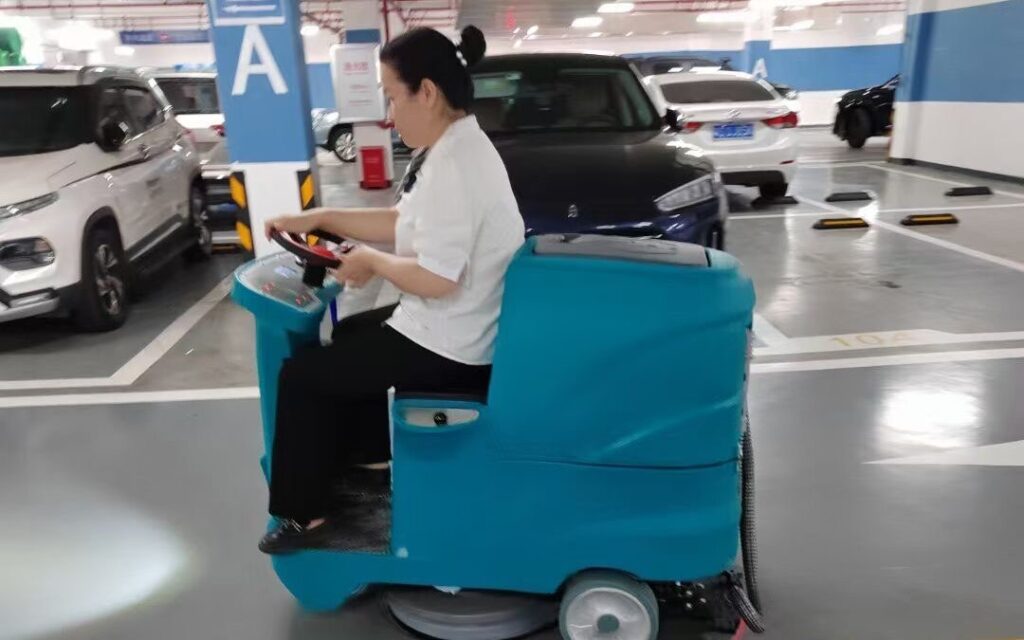
Industrial vs Commercial Floor Cleaning Machines: Two Very Different Profit Models
One of the biggest mistakes I see is treating industrial and commercial machines as the same business.
They are not.
Industrial Floor Cleaning Machines: Lower Volume, Higher Value
Typical buyers:
- Warehouses
- Manufacturing plants
- Logistics hubs
- Airports
What they really care about:
- Durability
- Reliability
- Productivity
- Low downtime
- Total Cost of Ownership (TCO)
From a distributor perspective:
- Sales cycles are longer
- Average order value is higher
- Margins are more stable
- Service expectations are higher
Industrial machines don’t sell fast — but when positioned correctly, they anchor your profitability.
Commercial Floor Cleaning Machines: Higher Volume, Tighter Margins
Typical buyers:
- Cleaning contractors
- Retail chains
- Hospitals
- Hotels & offices
What they care about:
- Price
- Ease of use
- Fast availability
- Quick service
From experience:
- Margins are thinner
- Competition is stronger
- Volume drives profit
- Portfolio breadth matters
Commercial machines win on turnover speed, not single-unit margin.
Smart distributors understand that industrial machines protect margin, while commercial machines drive cash flow.

Designing a Balanced Product Portfolio
A healthy distributor portfolio usually includes:
| Category | Role in Business |
|---|---|
| Entry-level commercial machines | Customer acquisition |
| Mid-range commercial scrubbers | Volume & repeat sales |
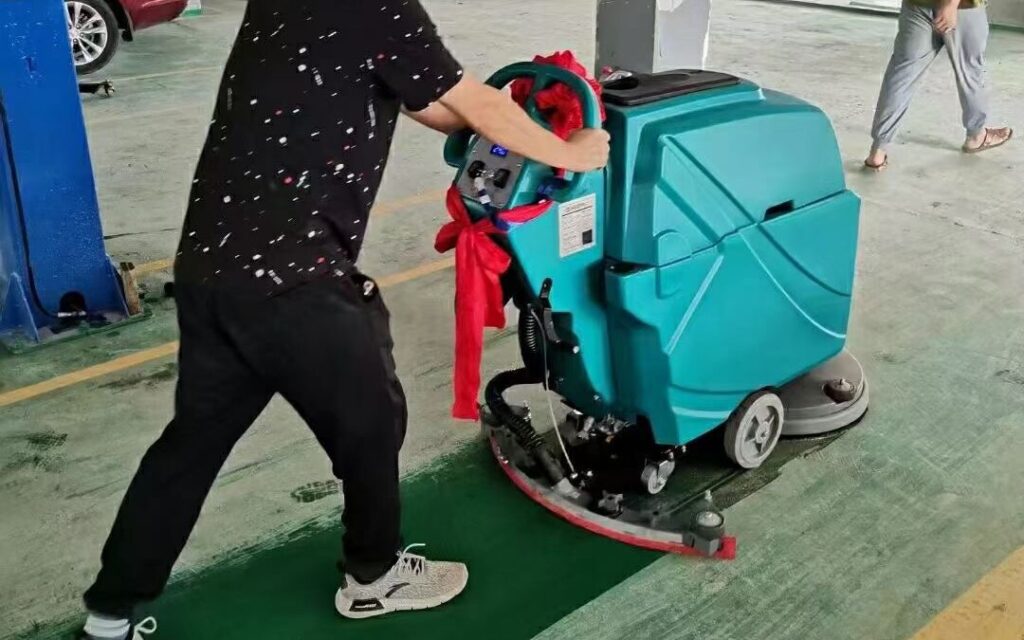
| Industrial walk-behind machines | Margin stability |
| Industrial ride-on machines | Profit anchors |
| Spare parts & consumables | Recurring revenue |
This balance reduces dependency on any single customer segment.
Understanding Cost Structure: Where Money Is Really Made or Lost
Many distributors only look at purchase price.
That’s a mistake.
A real cost structure includes:
1. Product Cost
- Machine price
- Configuration options
- Customization (OEM/ODM)
2. Logistics Cost
- Freight
- Import duties
- Warehousing
3. Service Cost
- Spare parts
- Labor
- Warranty claims
4. Hidden Costs
- Downtime
- Customer complaints
- Reputation damage
- Lost repeat business
This is why floor cleaning machine manufacturer vs floor cleaning equipment factory matters so much.
Factories focus on unit price.
Manufacturers think in lifecycle cost.

Profit Margins: What Actually Drives Distributor Profitability
From what I’ve seen, distributor profit is influenced more by structure than by price.
Key Profit Drivers
✔️ Product positioning
✔️ Supplier reliability
✔️ Spare parts availability
✔️ After-sales efficiency
✔️ Customer education (TCO)
A slightly higher-priced machine with stable quality often generates higher net profit over time.
Total Cost of Ownership (TCO): The Margin Protector
If there’s one concept that changes distributor thinking, it’s TCO.
What TCO Includes
- Purchase price
- Maintenance frequency
- Spare parts cost
- Downtime losses
- Warranty labor
- Customer retention impact
When distributors explain TCO to customers:
- Price objections drop
- Trust increases
- Sales conversations shift from price to value
This is especially critical in industrial floor cleaning solutions, where downtime is expensive.
Supplier Choice and Its Impact on Profit Margins
Your supplier determines:
- Your quality consistency
- Your service cost
- Your inventory pressure
- Your customer satisfaction
A strong floor cleaning machine manufacturer helps distributors:
✔️ Reduce warranty rates
✔️ Plan spare parts inventory
✔️ Maintain pricing discipline
✔️ Protect long-term margins
Weak suppliers quietly erode profit — even if their prices look attractive.
Market Trends That Affect Distributor Profitability (2025–2026)
Based on current floor cleaning machine factory market trends 2026, several forces are reshaping margins:
- Growth in warehousing & logistics
- Increased labor costs → automation demand
- Stronger focus on ride-on scrubber dryers
- Rising expectations for service & response time
- Distributors demanding supplier stability
Distributors who align portfolios early benefit the most.
Common Distributor Mistakes (And How to Avoid Them)
From real cases I’ve seen:
❌ Too many low-margin SKUs
❌ Chasing the cheapest supplier
❌ Ignoring service cost
❌ No clear industrial vs commercial strategy
Successful distributors do the opposite:
✔️ Focus on fewer, stronger products
✔️ Choose reliable manufacturers
✔️ Sell value, not price
✔️ Build repeat business
My Personal Experience: Why This Matters to Me
I’ve seen distributors with strong sales teams fail because their product and cost structure were broken.
And I’ve seen smaller distributors grow steadily because they:
- Designed a smart portfolio
- Chose the right supplier
- Understood their margins deeply
Machines can be copied.
Business structure cannot.
That’s why I care about sharing this perspective.
FAQ: Common Questions from Distributors & Dealers
Q1: Are industrial machines more profitable than commercial ones?
Yes in margin, but they require better service capability.
Q2: How can I protect margins in competitive markets?
Use TCO-based selling and supplier stability.
Q3: Should distributors carry both industrial and commercial machines?
Yes — but with clear positioning.
Q4: What’s the biggest hidden cost distributors ignore?
After-sales service and downtime impact.
Final Thoughts: Build a Portfolio, Not Just a Product List
If you’ve read this far, you already think like a long-term distributor.
The most successful distributors don’t ask:
“What sells today?”
They ask:
“What keeps my business profitable five years from now?”
If this article helped you see product portfolio, cost structure, and profit margins more clearly, then it has done exactly what it was meant to do.
And if you want to go deeper — into portfolio design, supplier evaluation, or margin optimization — that’s where real partnerships begin.
Because in this industry, profit is not an accident. It’s designed.