When I first started working in the industrial floor cleaning industry, I noticed something striking: not all manufacturers are created equal. You might see two machines side by side that look similar on the surface, but one lasts ten times longer than the other. As someone who has spent years inside manufacturing lines, coordinating R&D and production teams, I can tell you: durability, efficiency, and long-term reliability are engineered, not accidental.
If you are a distributor, brand owner, or procurement professional sourcing industrial floor cleaning solutions, understanding what separates a professional manufacturer from a mediocre one is critical. It’s not just about price or appearance — it’s about the materials, components, engineering rigor, and production processes that determine whether a machine will survive years of heavy-duty operation.
In this article, I’ll share firsthand insights on quality indicators that matter most when choosing an industrial floor cleaning solutions manufacturer. By the end, you’ll be able to quickly assess whether a supplier truly understands industrial engineering or is simply assembling commercial-grade machines.

1. Why Industrial Machines Are More Expensive — and Why It Matters
Many overseas buyers are surprised when they compare prices between industrial and commercial floor cleaning machines. Industrial machines cost more because they are designed to survive environments that commercial machines cannot tolerate.
Think about a warehouse or factory:
- Floors are rough concrete, often with debris, dust, or spilled chemicals.
- Machines run for 6–10 hours daily, sometimes continuously.
- They may encounter minor impacts from forklifts or carts.
- Water and cleaning chemicals can reach electrical components.
Commercial machines simply cannot handle this workload. They often fail after a few months, resulting in downtime, maintenance costs, and lost confidence in your operations. Industrial machines cost more because durability begins at the engineering stage and continues through materials, components, and assembly.
2. R&D & Engineering Design Differences
One of the clearest ways to separate professional manufacturers from average ones is to look at R&D and engineering practices. Here’s what a high-quality manufacturer does differently:
2.1 CAD Structural Analysis
Before any prototype hits the production floor, engineers perform Finite Element Analysis (FEA) on chassis, water tanks, squeegee frames, and drive decks. This allows them to simulate:
- Vibration and impact loads
- Stress on metal and plastic components
- Torque distribution across brush motors
- Tank deformation under full load
The result is a machine that maintains structural integrity over years, rather than bending or cracking under stress.
2.2 Motor Power & Torque Calculations
Industrial-grade brush and drive motors are not randomly chosen. Manufacturers calculate:
- Starting torque
- Load on inclines or rough surfaces
- Energy efficiency
- Heat dissipation
A commercial motor might survive 500 hours of heavy use, while an industrial motor is engineered to last 1,500–2,000 hours. That difference alone often justifies the higher initial investment.
2.3 Waterproofing and Electrical Protection
Durability is not just mechanical — it’s also electrical. Professional manufacturers seal electronics with:
- IP67-rated connectors
- Coated PCB boards
- Grommeted wiring
- Well-placed cable routing
Cheap machines skip this step, leading to corrosion or failure in wet conditions. In industrial environments, even a small water leak can render a machine inoperable within months.
2.4 Bearings and Axle Life
Brush decks, drive wheels, and squeegees all rely on high-quality bearings. A professional manufacturer calculates:
- Axial and radial loads
- Expected life cycles
- Torque resistance and lubrication schedules
Small components like bearings often determine whether a machine lasts six months or six years.
2.5 Battery & Power System Selection
Battery choice is another critical factor. Industrial machines may use:
- Lead-acid batteries for cost-effectiveness and heavy-duty applications
- Lithium-ion batteries for higher cycle life, lighter weight, and low maintenance
Engineers also ensure battery connectors, BMS (Battery Management Systems), and wiring are compatible with long-term industrial use.
3. Water Tank and Mold Manufacturing Quality
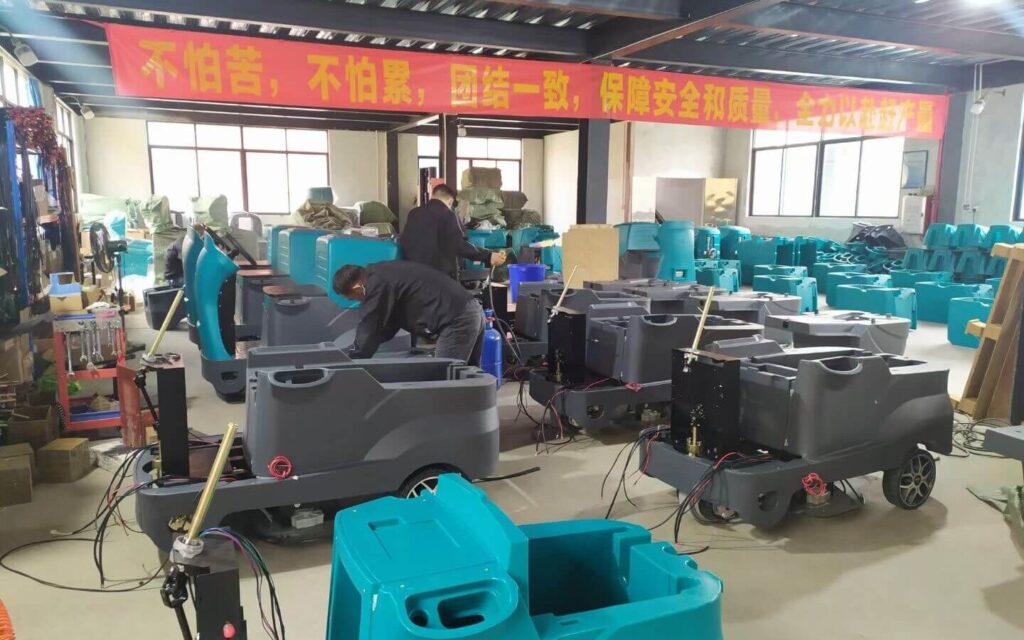
One aspect that surprises many buyers is how tank quality impacts overall durability. A professionally manufactured machine considers:
3.1 Rotational Molding vs Injection Molding
Industrial machines often use rotational molding for water tanks because it provides:
- Uniform wall thickness
- High impact resistance
- No weld lines that could crack
Commercial machines often use thinner injection-molded tanks, which are prone to deformation and breakage.
3.2 Wall Thickness
Industrial tanks usually range from 5–8 mm thickness, while commercial tanks are often 2.5–3 mm. Thicker walls support the machine’s weight, vibrations, and heavy-duty motors.
3.3 Drop and Burst Testing
Every industrial tank undergoes:
- Drop tests from 1–2 meters
- Hydraulic burst tests
- Chemical resistance testing
This guarantees that tanks survive real-world industrial usage without cracking or leaking.
4. Raw Materials and Components
The materials used are a key indicator of manufacturer quality:
4.1 Motors
- Commercial: 500-hour lifespan, low torque
- Industrial: 1,500–2,000-hour lifespan, high torque, heat-resistant windings
4.2 Chassis
- Industrial machines use 3–6 mm steel plates with reinforcement ribs and powder coating
- Commercial machines often use thinner steel or plastic frames prone to bending
4.3 Wheels and Drive Systems
- Industrial wheels are abrasion- and oil-resistant
- Gearboxes use hardened steel gears with sealed lubrication
- Bearings and shafts are precision-machined for long-term reliability
4.4 Electrical Components
- IP-rated connectors and heat-shrink terminals
- Vibration-resistant cabling
- Proper mechanical locking for all connections
All these details reduce failure rates in industrial environments.
5. Assembly & Production Process Differences
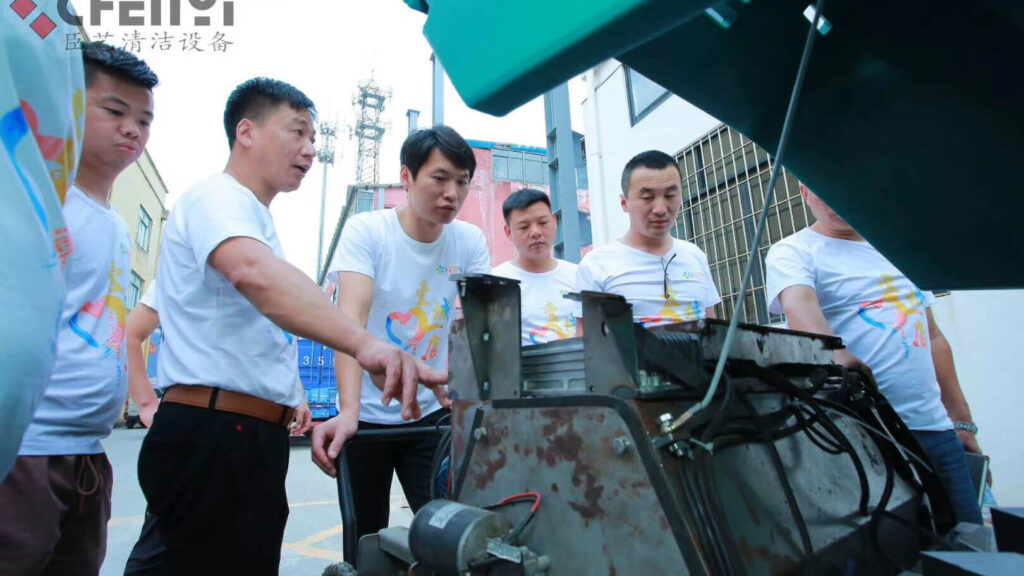
Even the best materials can fail if assembly is sloppy. Key practices for durability include:
5.1 Dedicated Industrial Fixtures and Jigs
- Motor mounts
- Tank alignment tools
- Squeegee frame positioning jigs
These tools ensure every machine is built consistently.
5.2 Torque-Controlled Fastening
- Every screw tightened to specification
- Digital torque guns track compliance
- Prevents cracked tanks or loose components
5.3 Aging & Functional Testing
- 48-hour continuous run tests
- Vibration tests
- Water flow, vacuum pressure, and noise measurement
Most commercial machines only get brief testing, increasing the likelihood of early failure.
5.4 Quality Traceability
- Serial numbers
- Component batch IDs
- Assembly and QC logs
Traceability ensures accountability and supports warranty and after-sales service.

6. Real Use Scenarios and Why They Matter
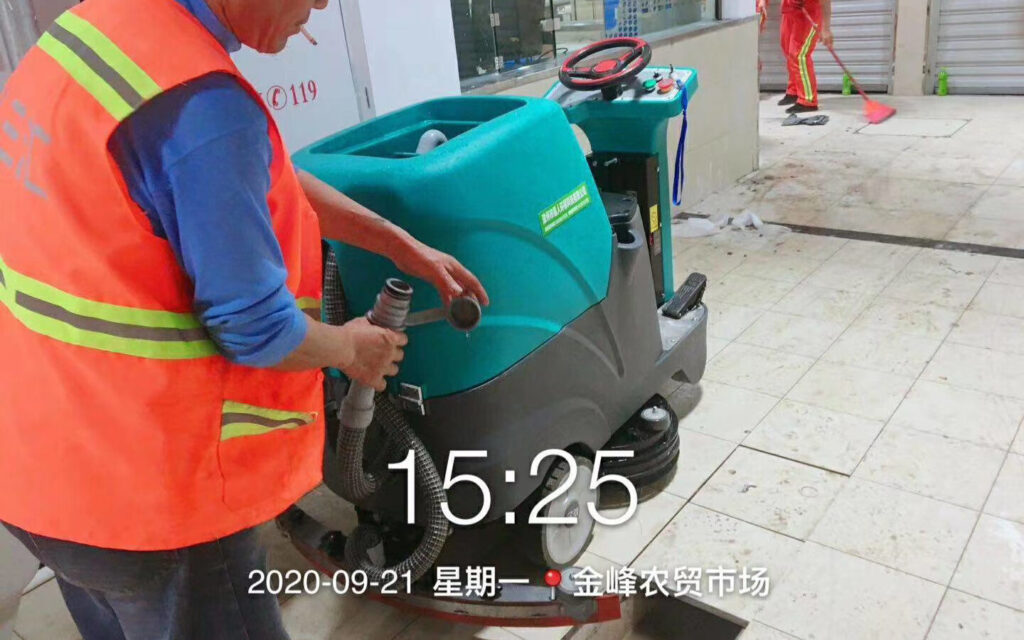
Durability is tested in the field:
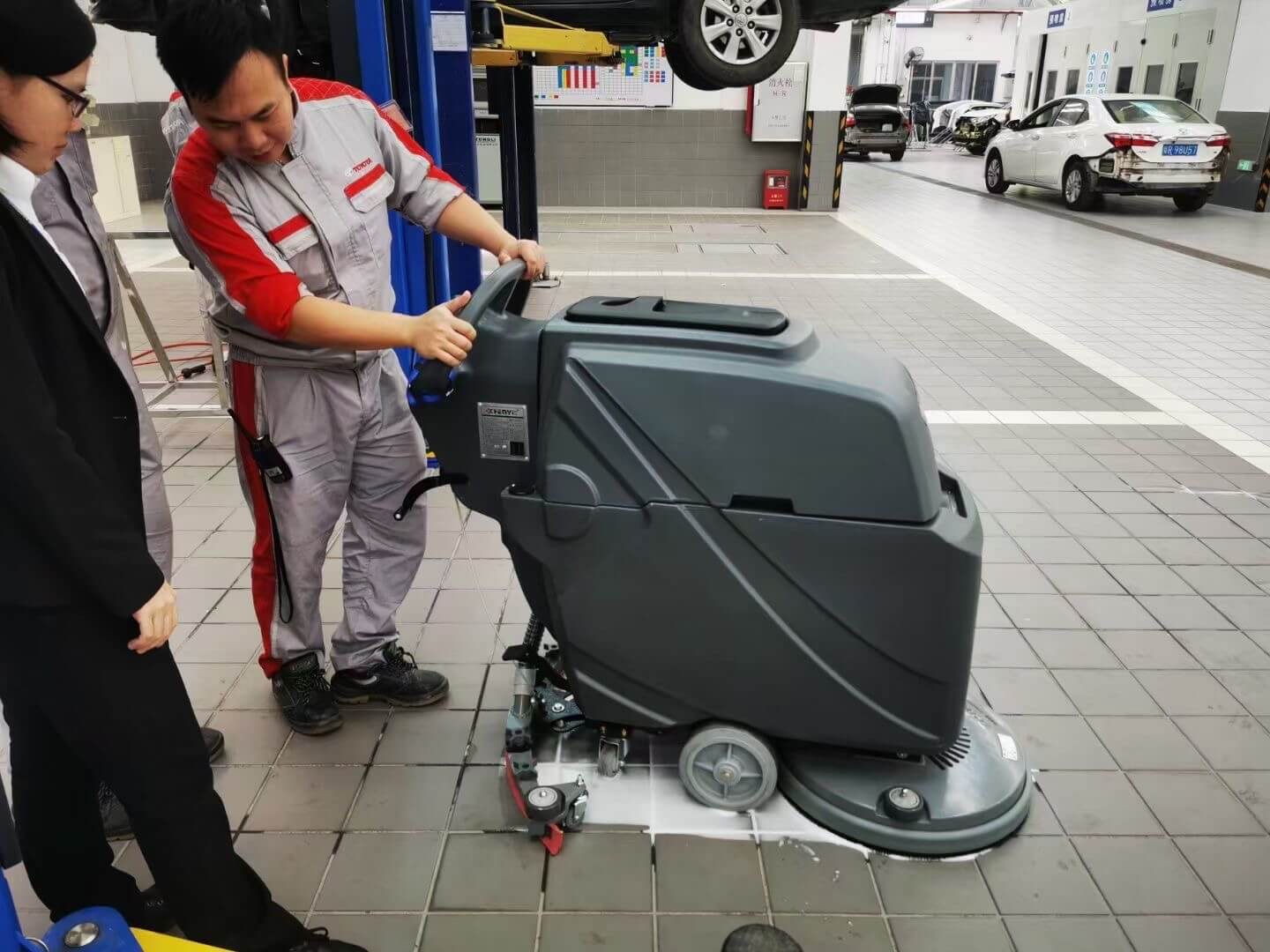
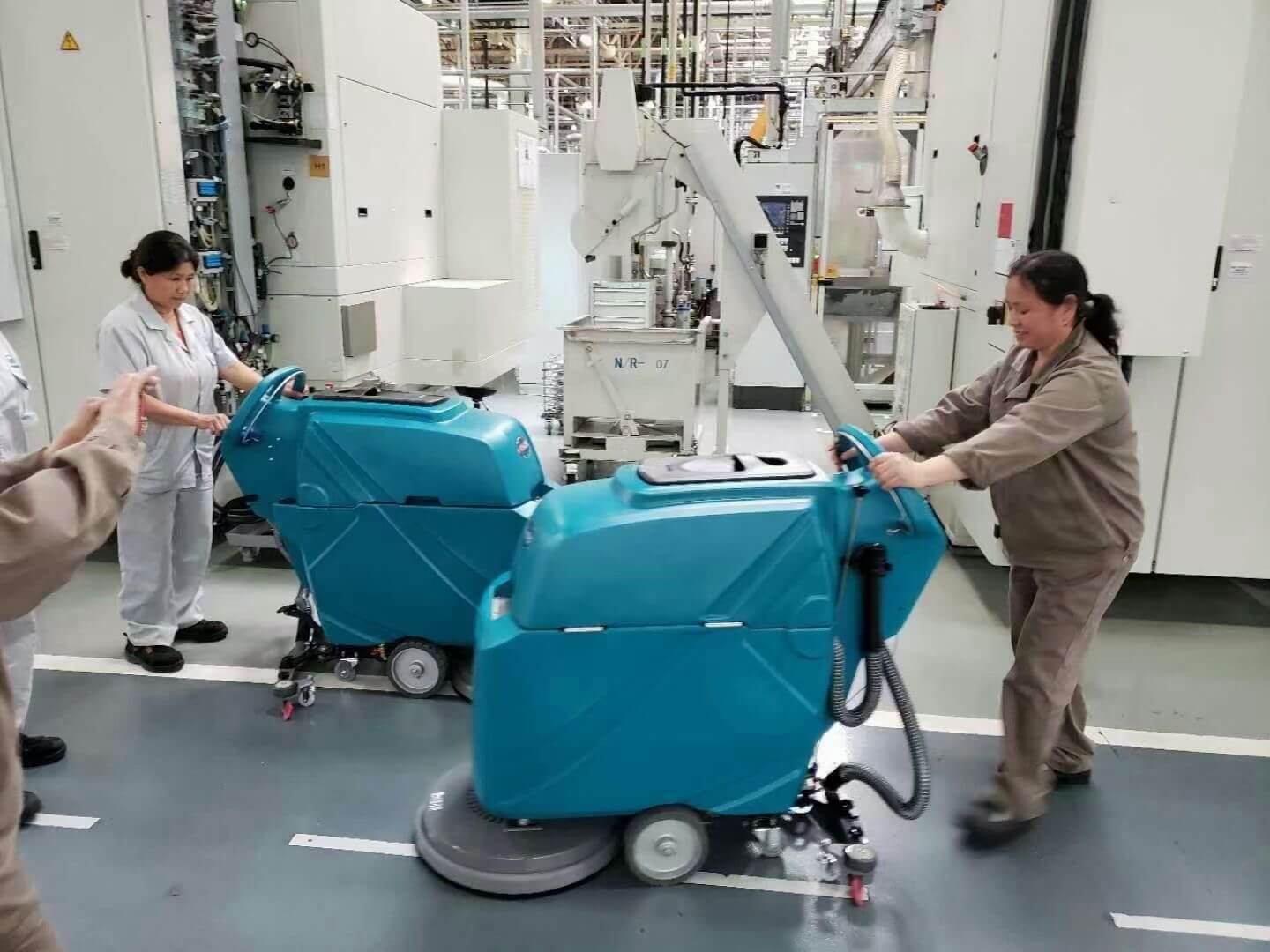
- Factories and workshops: dust, debris, chemical exposure, long shifts
- Warehouses and logistics centers: forklift impacts, heavy loads, long corridors
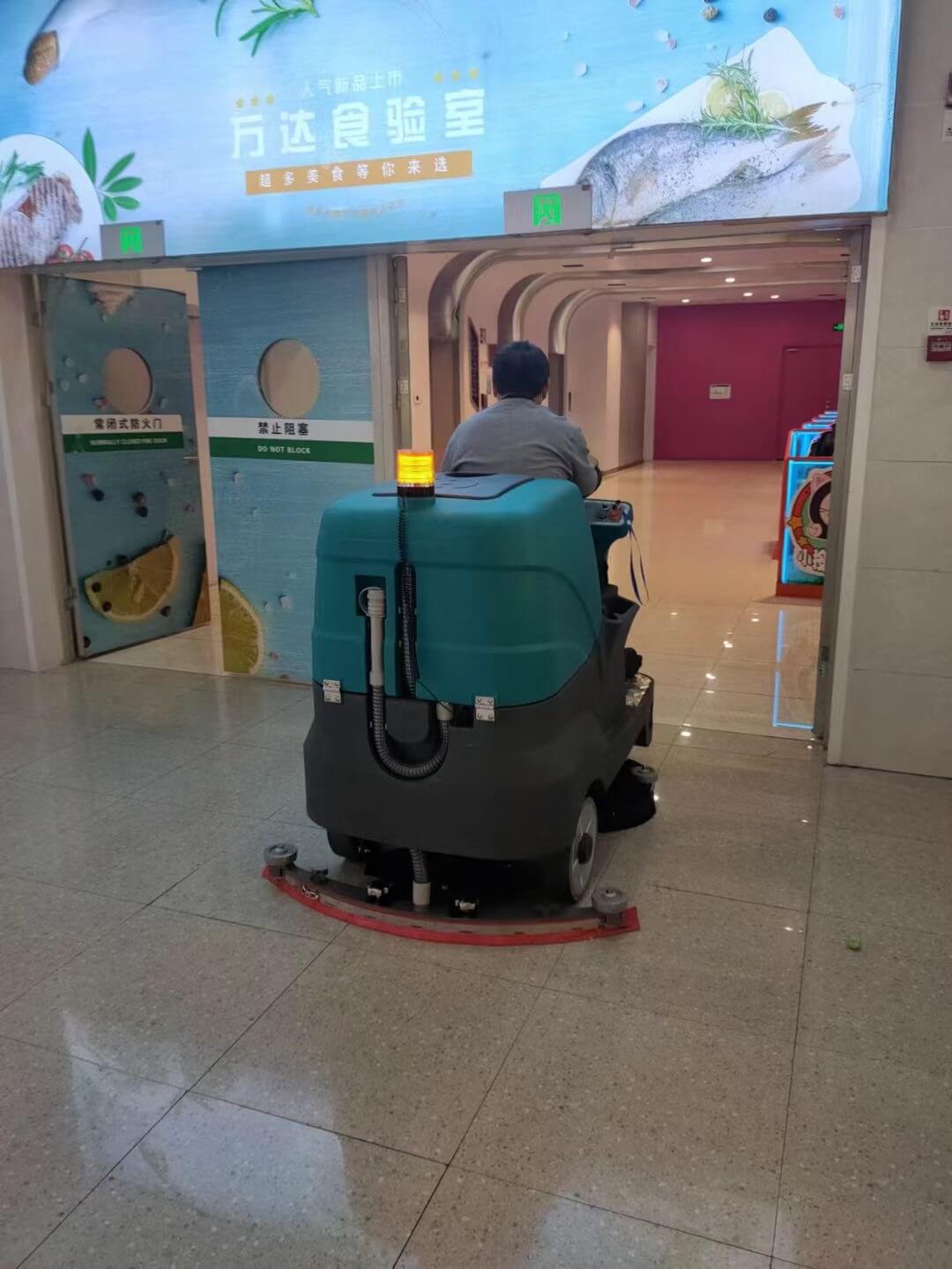
- Supermarkets and malls: quiet operation, consistent cleaning, long runtime
- Hospitals and schools: low noise, chemical resistance, safe electronics
- Parking garages: inclines, rough concrete, water pooling
Machines built with industrial standards perform reliably across all these scenarios.
7. Choosing the Right Manufacturer
Here are the top quality indicators I look for in a professional industrial floor cleaning solutions manufacturer:
✔ Strong R&D Team
- Designs machines, tests durability, simulates stresses
✔ Owns Mold and Tooling Capabilities
- Control over product consistency and long-term supply
✔ Industrial-Grade Materials
- Steel chassis, rotomolded tanks, IP-rated electronics
✔ Strict Assembly Standards
- Torque-controlled screws, fixtures, traceability
✔ Aging and Functional Tests
- 48-hour run, vibration, drop, chemical resistance
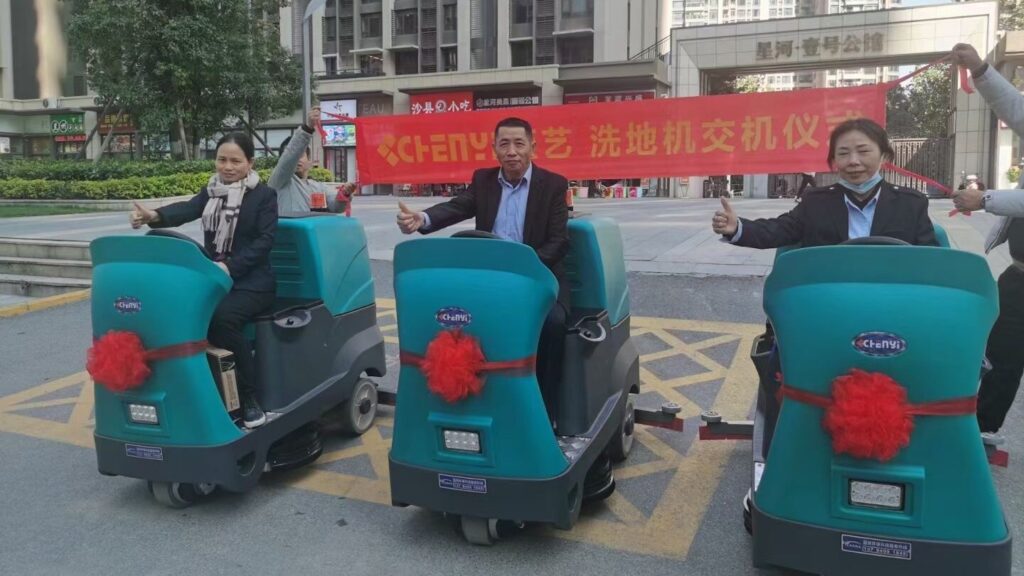
✔ OEM/ODM Support for Long-Term Supply
- Guarantees consistent quality for distributors or private brands
8. FAQ
Q1: Why are industrial floor scrubbers more expensive?
A: Higher-quality motors, reinforced chassis, rotomolded tanks, sealed electronics, and rigorous testing all contribute to durability and reliability.
Q2: How long does an industrial floor cleaning machine last?
A: Typically 5–10 years, depending on usage and maintenance.
Q3: Can a commercial floor scrubber be used in warehouses?
A: Not reliably. Commercial machines are designed for low-intensity use.
Q4: How do manufacturers verify durability?
A: Through CAD analysis, aging tests, drop and burst tests, vibration tests, and real-life field trials.
Q5: What proves a manufacturer is professional?
A: R&D capability, industrial materials, assembly standards, traceability, and consistent OEM/ODM support.
Final Thoughts
Choosing an industrial floor cleaning solutions manufacturer is not just a procurement decision — it’s a long-term investment. Durability, reliability, and efficiency are engineered into every part of the machine, from motors and batteries to tanks, chassis, and electronics.
If you want machines that survive heavy-duty use, reduce maintenance costs, and protect your reputation, focus on the quality indicators outlined above. Understanding these will separate true industrial partners from commercial suppliers, and save you headaches — and money — for years to come.
Durability isn’t optional in industrial environments. It’s engineered, tested, and proven — and a professional manufacturer delivers it consistently.