When I talk with customers—especially facility managers and cleaning contractors—the same question comes up again and again:
“How long do the wear parts on my commercial floor scrubber or sweeper actually last?”
It makes sense. Whether you run a supermarket, school, warehouse, or logistics center, your total cost of ownership (TCO) depends heavily on your maintenance schedule. And from my years working with teams using our equipment every day, I’ve learned that most downtime has nothing to do with the machine itself—it’s almost always about wear parts that weren’t replaced on time.
Before we go deeper, I want to clarify the difference customers often search for:
Industrial vs. Commercial Wear Part Lifespan (Real-world difference)
Industrial machines run on tougher floors (epoxy, concrete, rough warehouse surfaces). That means:
- Parts wear faster
- Brushes and squeegee blades degrade more quickly
- Filters clog sooner
- Batteries cycle more frequently
Commercial environments (schools, hospitals, retail) generally provide:
- Softer flooring
- Less abrasive dust
- Lower daily run hours
So the exact same squeegee blade or roller brush often lasts 30–50% longer in a commercial setting.
As a professional floor cleaning machine manufacturer, I see this pattern across nearly every project we handle.
Now, let’s break down the lifespan and replacement schedule of each major wear part—what you came here to learn.
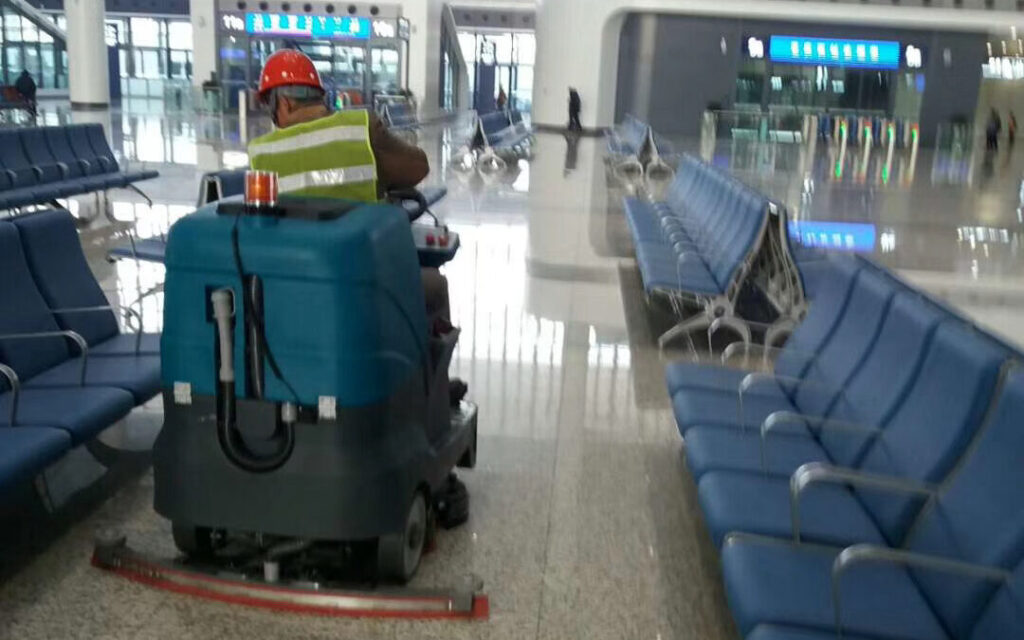
What Wear Parts Matter Most in Commercial Floor Cleaning Machines?
Wear parts are the components designed to degrade naturally during use. They’re essential for performance but require regular replacement.
The parts below apply to both scrubbers and sweepers:
- Squeegee blades
- Brushes (disc brushes, roller brushes, side brushes)
- Filters (dust filters & water filters)
- Batteries
- Belts
- Vacuum motor consumables
- Skirts & seals
- Brooms (for sweepers)
Every part affects cleaning quality, efficiency, and machine longevity. When one fails, the entire system struggles.
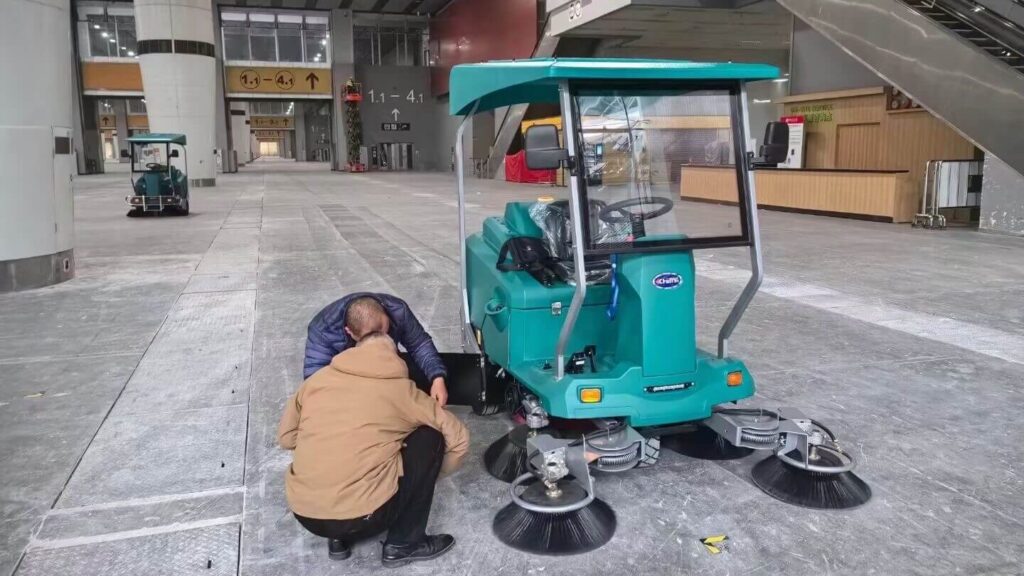
Wear Parts Lifespan + Replacement Guide (With Real-World Ranges)
Below, I’m sharing what I tell my own customers. These are real, reliable ranges based on thousands of machines in service.
1. Squeegee Blades
Typical Lifespan: 3–6 months (commercial use)
Replacement Frequency: Every 300–600 hours
What shortens lifespan:
- Running the machine on rough concrete
- Incorrect squeegee pressure
- Chemical exposure
- Not flipping the blade regularly
My advice:
Flip the blade every 1–2 weeks. Clean it after every shift. I’ve seen cleaning teams get 50% more life just by doing this one habit.
2. Brushes (Disc, Roller, Side Brushes)
Typical Lifespan: 6–12 months
Replacement Frequency: Every 500–1000 hours
What affects lifespan:
- Brush pressure too high (this is the #1 killer)
- Abrasive floor surfaces
- Debris like metal chips or sand
- Use of the wrong brush type for the floor
My real-world example:
One supermarket chain I work with used overly aggressive pressure. Their disc brushes lasted 4 weeks instead of 5–7 months. Once we reset the recommended pressure, their cost dropped by 60%.
3. Filters (Dust Filters & Water Filters)
Dust Filter Lifespan: 3–6 months (commercial)
Water Filter Lifespan: 6–12 months
What reduces lifespan:
- Fine dust (schools, logistics centers)
- Airflow blockages
- Not cleaning pre-filters weekly
Dust filters matter more than people think. A clogged dust filter increases motor load—eventually damaging your vacuum motor consumables.
4. Batteries
Typical Lifespan: 2–4 years
Replacement Frequency: Based on charge cycles (400–1200 cycles)
Factors affecting battery life:
- Over-discharging below 20%
- Inconsistent charging habits
- Using non-OEM chargers
- Running in extreme cold or heat
If there’s one part that defines your machine’s total cost, it’s the battery. And most failures happen because operators don’t follow a consistent charging schedule.
5. Belts
Typical Lifespan: 6–12 months
Replacement Frequency: Inspect monthly, replace if cracked or loose
Belts drive brushes, vacuum systems, or roller mechanisms. When belts slip, cleaning quality drops immediately.
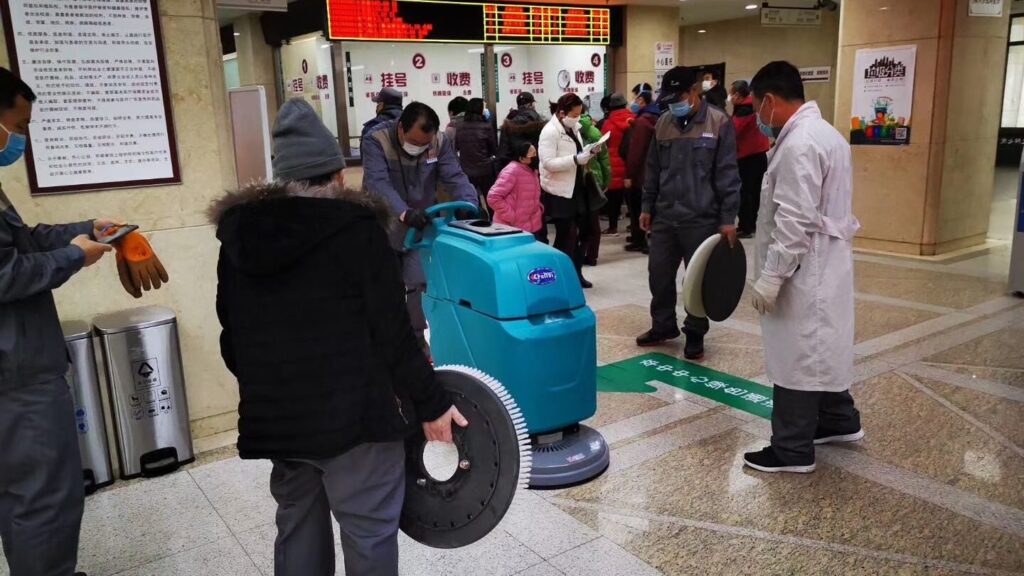
6. Vacuum Motor Consumables
Typical Lifespan: 12–24 months
Replacement Frequency: Based on suction performance
Consumables include:
- Carbon brushes
- Motor gaskets
- Filters protecting the motor
Motor carbon brushes usually need replacement every 400–600 hours.
7. Skirts & Seals
Typical Lifespan: 6–12 months
Replacement Frequency: Replace when torn or stiff
They help contain water, detergent, and dust. If you’re seeing water streaks, this is usually the cause.
8. Brooms (For Sweepers)
Typical Lifespan: 4–9 months
Replacement Frequency: Every 400–700 hours
Poly bristles last longer on smooth floors, while mixed steel-poly brooms survive harsh debris handling.
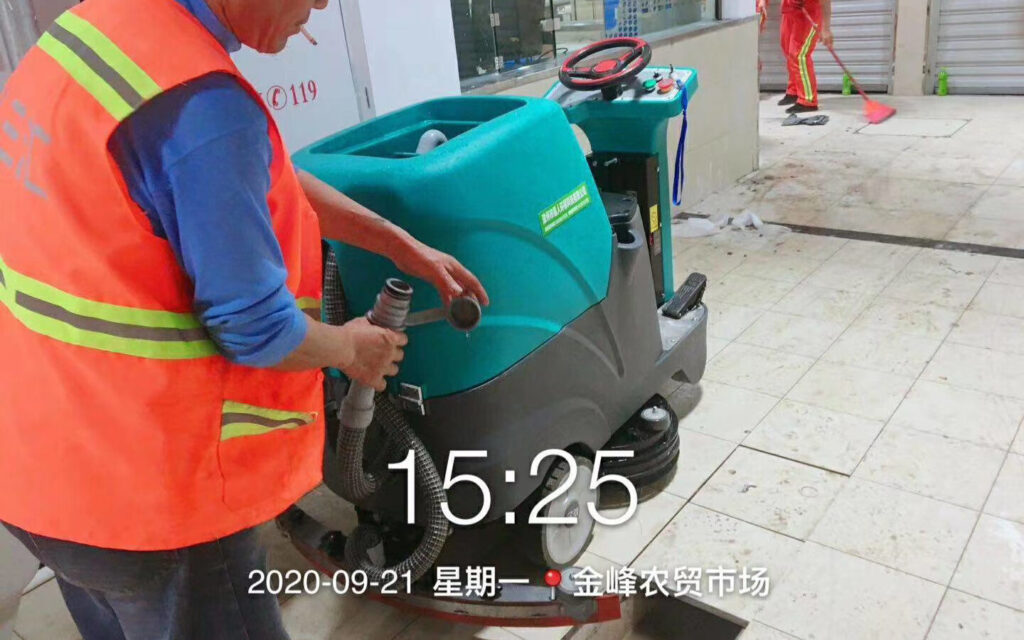
Wear Parts Lifespan Table (Google Featured Snippet Friendly)
| Wear Part | Typical Lifespan | Replacement Frequency | Notes |
|---|---|---|---|
| Squeegee blades | 3–6 months | 300–600 hrs | Flip regularly to extend life |
| Brushes (disc/roller/side) | 6–12 months | 500–1000 hrs | Pressure setting is critical |
| Dust filters | 3–6 months | Quarterly | Industrial sites shorten lifespan |
| Water filters | 6–12 months | Semi-annual | Clean monthly to avoid clogging |
| Batteries | 2–4 years | Based on cycles | Avoid deep discharge |
| Belts | 6–12 months | Monthly checks | Replace if loose or cracked |
| Vacuum motor consumables | 12–24 months | Based on suction drop | Carbon brushes: 400–600 hrs |
| Skirts & seals | 6–12 months | When torn | Affects water recovery |
| Brooms (sweepers) | 4–9 months | 400–700 hrs | Rough floors shorten life |
How Lifespan Changes by Industry
From my experience working as a floor cleaning solutions supplier, different industries create drastically different wear rates:
Warehouses & Logistics Centers
- High dust
- Rough concrete
- Long daily run times
➡ Parts wear 30–40% faster
Supermarkets & Retail
- Smooth floors
- Consistent cleaning schedule
➡ Brushes & squeegees last longest here
Schools
- Medium dust
- Wide open spaces
➡ Filters clog faster
Hospitals
- Strict hygiene requirements
- Daily sanitizing
➡ Squeegees replaced more frequently to avoid streaks
Parking Lots
- Grit, sand, road dust
➡ Brooms wear quickly; filters clog fast
Manufacturing Factories
- Metal chips, abrasives
➡ Roller brushes and squeegees degrade rapidly
This is why I always ask new customers, “What floor type and environment are you cleaning?” It tells me more than the machine model.

Maintenance Tips That Actually Extend Part Life
Through years of working with cleaning teams, these are the habits that consistently boost lifespan.
Daily
- Clean squeegee blades after every shift
- Rinse recovery and solution tanks
- Remove debris from brushes and brooms
Weekly
- Inspect brush pressure
- Clean dust filters
- Check belts for wear
- Ensure skirts & seals aren’t torn
Monthly
- Test suction performance
- Inspect battery water levels (for lead-acid)
- Check all hoses and fittings
Quarterly
- Replace dust filters (especially in industrial sites)
- Inspect carbon brushes in vacuum motors
If your team follows this routine, your machine will feel like it runs forever.
Common Problems Caused by Worn Wear Parts
I see these issues almost weekly:
Streaks on the floor
→ Worn squeegee blade or damaged skirt
Weak water recovery / puddles
→ Clogged filter or torn seal
Poor scrubbing performance
→ Worn brushes or low brush pressure
Weak suction
→ Dust filter clogged or motor carbon brushes worn
Machine vibrating
→ Brush unbalanced or broom deformed
If you’re seeing any of these, it’s usually a simple wear-part issue—not a major repair.
How to Choose Reliable Wear Parts (From a Manufacturer’s Perspective)
As someone working inside a floor cleaning equipment manufacturer, I can tell you there’s a huge quality difference between generic parts and OEM-grade parts.
Here’s what to look for:
✔ Squeegee blades made from Linatex or high-quality polyurethane
Cheaper rubber dries out fast.
✔ Brushes with high-density bristle fill
Low-density brushes lose cleaning efficiency quickly.
✔ Filters with proper HEPA or high-flow mesh
Cheap filters clog in half the time.
✔ Batteries from reputable suppliers
Avoid unbranded batteries—they fail early and cost more long-term.
✔ Compatibility with your exact machine model
The wrong squeegee curve or broom height ruins cleaning performance.
FAQ
1. How often should floor scrubber brushes be replaced?
Every 6–12 months or when bristle length reduces by 30–50%.
2. Do squeegee blades wear faster on industrial floors?
Yes. Rough concrete and dust shorten squeegee life by 30–40%.
3. How do I know when a sweeper side brush is worn out?
If the bristles lose stiffness, shorten by 30%, or stop contacting edges effectively.
4. Why is my scrubber leaving streaks?
Usually worn squeegee blades, damaged skirts, or incorrect pressure.
5. How long do floor scrubber batteries last?
Most commercial batteries last 2–4 years, depending on charging habits.